Introduction and Context
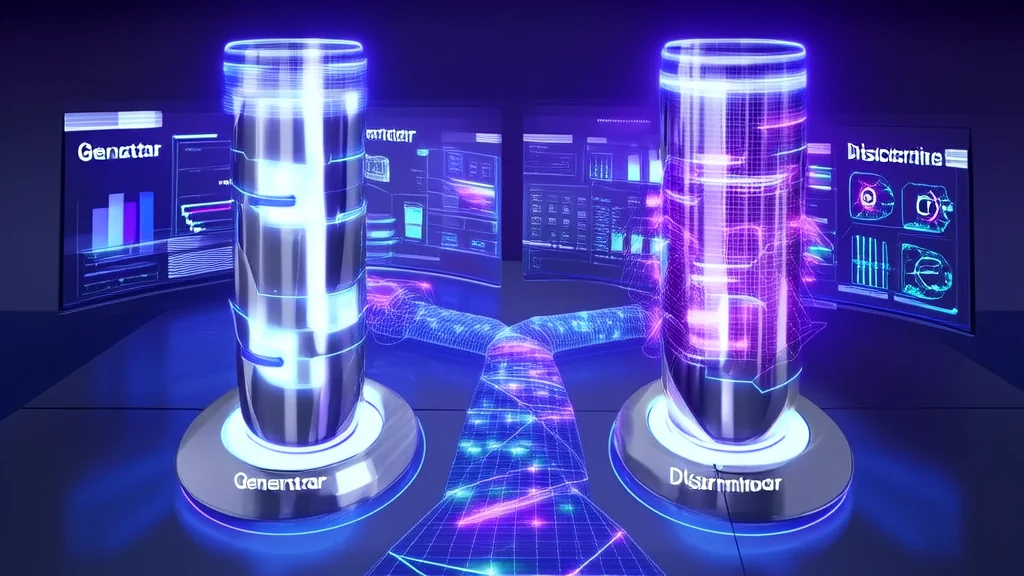
Generative Adversarial Networks (GANs) are a class of machine learning systems that consist of two neural networks, the generator and the discriminator, which are trained simultaneously through an adversarial process. The generator creates data that is indistinguishable from real data, while the discriminator evaluates the authenticity of the generated data. GANs were introduced by Ian Goodfellow and his colleagues in 2014, and they have since become a cornerstone in the field of generative modeling, enabling the creation of highly realistic synthetic data.
The importance of GANs lies in their ability to generate high-quality, diverse, and realistic data, which has numerous applications in fields such as computer vision, natural language processing, and audio synthesis. Historically, GANs emerged as a solution to the challenges of generating complex, high-dimensional data, such as images and text, where traditional methods like Variational Autoencoders (VAEs) often struggled with producing sharp and diverse outputs. Key milestones in the development of GANs include the introduction of the original GAN framework in 2014, followed by significant improvements and variations such as DCGAN, WGAN, and StyleGAN, each addressing specific limitations and enhancing the quality and stability of generated data.
Core Concepts and Fundamentals
At the heart of GANs is the adversarial training process, where the generator and discriminator compete against each other. The generator aims to create data that is indistinguishable from real data, while the discriminator tries to distinguish between real and fake data. This competition drives both networks to improve over time, resulting in the generator producing increasingly realistic data.
Mathematically, the goal of the generator \(G\) is to minimize the probability that the discriminator \(D\) correctly identifies the generated data as fake, while the discriminator aims to maximize this probability. This can be formulated as a minimax game, where the objective function is:
\[ \min_G \max_D V(D, G) = \mathbb{E}_{x \sim p_{data}(x)}[\log D(x)] + \mathbb{E}_{z \sim p_z(z)}[\log (1 - D(G(z)))] \]
Here, \(p_{data}(x)\) is the distribution of real data, \(p_z(z)\) is the prior on input noise variables, and \(G(z)\) is the generated data. Intuitively, the generator learns to map random noise to data that looks like it comes from the real data distribution, while the discriminator learns to distinguish between real and generated data.
The core components of a GAN are the generator and the discriminator. The generator typically consists of a deep neural network, often a deconvolutional or transposed convolutional network, that maps a random noise vector to a data sample. The discriminator, on the other hand, is a classification network, often a convolutional neural network, that takes a data sample and outputs a probability indicating whether the sample is real or fake.
GANs differ from related technologies like VAEs in several ways. While VAEs aim to learn an explicit model of the data distribution, GANs focus on generating samples that are indistinguishable from real data. VAEs often produce blurry images due to their reliance on a reconstruction loss, whereas GANs can generate sharper and more diverse images. Additionally, GANs do not require a specific likelihood function, making them more flexible but also more challenging to train.
Technical Architecture and Mechanics
The architecture of a GAN involves two main components: the generator and the discriminator. The generator \(G\) takes a random noise vector \(z\) as input and produces a synthetic data sample \(G(z)\). The discriminator \(D\) takes a data sample \(x\) as input and outputs a probability \(D(x)\) indicating whether the sample is real or fake.
Generator: The generator is typically a deep neural network, often a deconvolutional or transposed convolutional network, that maps the random noise vector \(z\) to a data sample. For example, in the case of image generation, the generator might start with a 100-dimensional noise vector and progressively upsample it to produce a 64x64 image. The architecture of the generator is designed to capture the complex structure of the data, and it often includes techniques like batch normalization and ReLU activation functions to improve the quality of the generated data.
Discriminator: The discriminator is a classification network, often a convolutional neural network, that takes a data sample \(x\) and outputs a probability \(D(x)\) indicating whether the sample is real or fake. The discriminator is trained to maximize the probability of assigning the correct label to both real and generated data. For instance, in a typical GAN setup, the discriminator might be a CNN with several convolutional layers, followed by fully connected layers and a sigmoid activation function to output the probability.
The training process of a GAN involves alternating between training the generator and the discriminator. Initially, the generator produces poor-quality data, and the discriminator easily distinguishes between real and fake data. As training progresses, the generator improves, and the discriminator becomes more challenged. The key steps in the training process are:
- Generate Fake Data: The generator \(G\) takes a random noise vector \(z\) and produces a synthetic data sample \(G(z)\).
- Train Discriminator: The discriminator \(D\) is trained on a combination of real data \(x\) and generated data \(G(z)\). The objective is to maximize the probability of correctly identifying real data and minimizing the probability of incorrectly identifying generated data.
- Train Generator: The generator \(G\) is trained to minimize the probability that the discriminator correctly identifies the generated data as fake. This is done by backpropagating the error from the discriminator to the generator and updating the generator's parameters.
Key design decisions in GANs include the choice of network architectures for the generator and discriminator, the use of appropriate loss functions, and the implementation of techniques to stabilize training. For example, the use of Wasserstein loss in WGANs helps to address the issue of vanishing gradients and mode collapse, leading to more stable and higher-quality generated data.
Technical innovations in GANs include the use of progressive growing in ProGAN, where the generator and discriminator are gradually increased in size during training, allowing for the generation of high-resolution images. Another breakthrough is the introduction of style-based generators in StyleGAN, which disentangle the high-level attributes of the generated data, such as pose and identity, from the low-level details, leading to more controllable and diverse image generation.
Advanced Techniques and Variations
Since the introduction of the original GAN framework, numerous variations and improvements have been proposed to address specific limitations and enhance the quality and stability of generated data. Some of the most notable advancements include:
- DCGAN (Deep Convolutional GAN): Introduced in 2015, DCGAN uses deep convolutional networks for both the generator and discriminator, leading to the generation of high-quality and diverse images. DCGANs have become a standard baseline for many GAN applications.
- WGAN (Wasserstein GAN): Proposed in 2017, WGAN addresses the issue of vanishing gradients and mode collapse by using the Wasserstein distance instead of the Jensen-Shannon divergence. This leads to more stable training and higher-quality generated data.
- StyleGAN: Introduced in 2018, StyleGAN uses a style-based generator that disentangles the high-level attributes of the generated data from the low-level details. This allows for more controllable and diverse image generation, with applications in areas such as face synthesis and art generation.
- BigGAN: BigGAN, introduced in 2019, focuses on scaling up the GAN architecture to generate high-fidelity images at large resolutions. By using a large number of parameters and a carefully designed training strategy, BigGAN achieves state-of-the-art performance in image generation.
These modern variations and improvements have significantly advanced the capabilities of GANs, but they also come with trade-offs. For example, while WGANs provide more stable training, they require careful tuning of the critic's Lipschitz constraint. StyleGAN, while offering more control over the generated data, is more complex and computationally intensive. Recent research developments, such as the use of self-attention mechanisms and improved regularization techniques, continue to push the boundaries of what GANs can achieve.
Practical Applications and Use Cases
GANs have found a wide range of practical applications across various domains, including computer vision, natural language processing, and audio synthesis. In computer vision, GANs are used for tasks such as image-to-image translation, where they can convert images from one domain to another, such as turning a sketch into a photorealistic image. For example, CycleGAN and Pix2Pix are popular GAN architectures used for image translation tasks.
In natural language processing, GANs have been applied to tasks such as text generation and style transfer. For instance, TextGAN is a GAN-based model that generates coherent and contextually relevant text. In audio synthesis, GANs are used to generate realistic speech and music. WaveGAN, for example, is a GAN-based model that generates high-fidelity audio waveforms.
GANs are particularly suitable for these applications because they can generate high-quality, diverse, and realistic data, which is essential for tasks such as image and text generation. The ability of GANs to learn complex data distributions and generate new, unseen data makes them a powerful tool in many real-world scenarios. For example, GANs are used in the fashion industry to generate new clothing designs, in the film industry to create realistic visual effects, and in the medical field to generate synthetic medical images for training and testing purposes.
Technical Challenges and Limitations
Despite their success, GANs face several technical challenges and limitations. One of the primary challenges is the difficulty in training GANs, which often suffer from issues such as mode collapse, where the generator fails to produce a diverse set of samples, and vanishing gradients, where the discriminator provides no useful gradient information to the generator. These issues can lead to unstable training and poor-quality generated data.
Another challenge is the computational requirements of GANs, especially for large-scale and high-resolution data. Training GANs, particularly those with complex architectures like StyleGAN and BigGAN, requires significant computational resources, including powerful GPUs and large amounts of memory. This can be a limiting factor for many researchers and practitioners.
Scalability is also a concern, as GANs can be difficult to scale to very large datasets and high-dimensional data. Techniques such as progressive growing and self-attention mechanisms have been developed to address some of these scalability issues, but they still present challenges in terms of training time and resource requirements.
Research directions aimed at addressing these challenges include the development of more stable training algorithms, the use of better regularization techniques, and the exploration of more efficient architectures. For example, recent work on spectral normalization and gradient penalty methods has shown promise in stabilizing GAN training and improving the quality of generated data.
Future Developments and Research Directions
Emerging trends in the field of GANs include the development of more controllable and interpretable GANs, the integration of GANs with other machine learning paradigms, and the application of GANs to new and diverse domains. One active research direction is the development of conditional GANs, which allow for more fine-grained control over the generated data. For example, conditional GANs can be used to generate images with specific attributes, such as a person with a particular hairstyle or a car with a specific color.
Another area of active research is the integration of GANs with reinforcement learning and other machine learning paradigms. This can lead to more robust and versatile models that can handle a wider range of tasks. For example, GANs can be used to generate synthetic data for training reinforcement learning agents, or to augment the data used for training other machine learning models.
Potential breakthroughs on the horizon include the development of GANs that can generate data in real-time, the use of GANs for unsupervised learning tasks, and the application of GANs to new domains such as robotics and autonomous systems. As GANs continue to evolve, they are likely to play an increasingly important role in a wide range of applications, from creative content generation to scientific discovery and beyond.
From an industry perspective, GANs are already being used in a variety of products and systems, and their adoption is expected to grow as the technology continues to mature. Academic research is also driving the development of new GAN architectures and training techniques, pushing the boundaries of what is possible with generative models.