Opening Hook
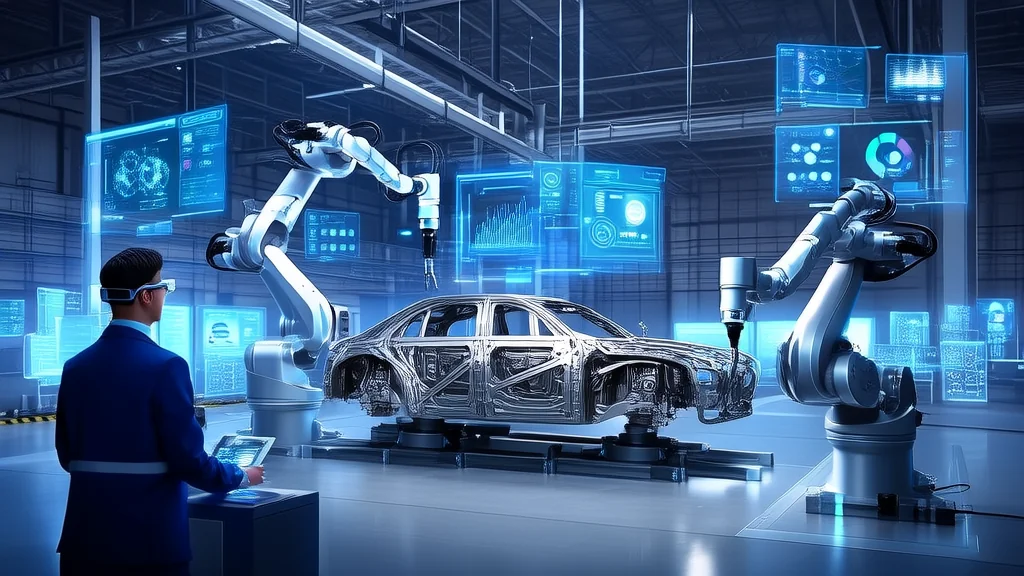
According to a recent report by McKinsey, the global manufacturing sector could save up to $1.2 trillion annually by 2025 through the implementation of AI technologies. This staggering figure underscores the transformative potential of artificial intelligence (AI) in optimizing manufacturing processes and enhancing quality control. As industries grapple with increasing competition and the need for higher efficiency, AI-driven solutions such as predictive maintenance and automated quality inspection systems are becoming indispensable. These technologies not only reduce operational costs but also improve product quality, leading to significant business advantages.
Industry Context and Market Dynamics
The manufacturing industry is currently undergoing a digital transformation, driven by the integration of advanced technologies like AI, IoT, and robotics. The global AI in manufacturing market is projected to reach $15.2 billion by 2025, growing at a CAGR of 48.7% from 2020 to 2025. This growth is fueled by the increasing demand for automation, improved productivity, and enhanced quality control.
Key pain points in the manufacturing sector include high maintenance costs, frequent equipment failures, and inconsistent product quality. AI addresses these issues by providing real-time insights, predictive analytics, and automated inspection capabilities. In a highly competitive landscape, companies like Google, Microsoft, and Amazon, along with innovative startups, are leading the charge in developing and implementing AI solutions that offer significant cost savings and operational efficiencies.
In-Depth Case Studies
Case Study 1: General Electric (GE) - Predictive Maintenance
General Electric, a global leader in industrial manufacturing, faced significant challenges with unplanned downtime and high maintenance costs. To address these issues, GE implemented an AI-based predictive maintenance system called Predix. This solution uses machine learning algorithms to analyze sensor data from industrial equipment, enabling the prediction of potential failures before they occur.
Specific Problem: Unplanned downtime and high maintenance costs.
AI Solution Implemented: Predix, an AI platform that uses machine learning algorithms to predict equipment failures.
Measurable Results: GE reported a 20% reduction in unplanned downtime and a 35% decrease in maintenance costs. The implementation timeline was approximately 12 months, with ongoing optimization and updates.
Case Study 2: BMW - Automated Quality Inspection
Bayerische Motoren Werke (BMW), a leading automotive manufacturer, sought to enhance its quality control processes to reduce defects and improve production efficiency. BMW partnered with Microsoft to develop an AI-powered automated quality inspection system using Azure Machine Learning and computer vision technology. This system analyzes images of car parts and components, identifying defects with high accuracy.
Specific Problem: High defect rates and manual inspection inefficiencies.
AI Solution Implemented: An AI-powered automated quality inspection system using Azure Machine Learning and computer vision.
Measurable Results: BMW achieved a 28% improvement in defect detection accuracy and a 15% reduction in inspection time. The project was implemented over a period of 9 months, with continuous refinement and expansion to other production lines.
Case Study 3: FANUC - Predictive Maintenance for Robotics
FANUC, a major player in the robotics industry, aimed to enhance the reliability and performance of its industrial robots. The company developed an AI-based predictive maintenance solution called FIELD (FANUC Intelligent Edge Link and Drive) System. This solution uses machine learning to monitor and predict the health of robotic systems, allowing for proactive maintenance and reducing downtime.
Specific Problem: Frequent robot failures and high maintenance costs.
AI Solution Implemented: FIELD System, an AI platform that uses machine learning to predict and prevent robotic failures.
Measurable Results: FANUC reported a 25% reduction in robot downtime and a 30% decrease in maintenance costs. The implementation took approximately 18 months, with ongoing support and updates provided to customers.
Technical Implementation Insights
The key AI technologies used in these case studies include machine learning algorithms, computer vision, and edge computing. For predictive maintenance, machine learning models such as Random Forest, Support Vector Machines (SVM), and Neural Networks are commonly employed to analyze sensor data and predict equipment failures. In automated quality inspection, computer vision techniques, including Convolutional Neural Networks (CNNs) and image processing, are used to detect defects with high accuracy.
Implementation challenges often include data quality and availability, integration with existing systems, and the need for specialized expertise. Solutions to these challenges involve data cleaning and preprocessing, using APIs and middleware for seamless integration, and partnering with AI experts or leveraging cloud-based AI services. Performance metrics, such as accuracy, precision, recall, and F1 score, are crucial for evaluating the effectiveness of AI solutions. Benchmarks are set based on historical data and industry standards to ensure optimal performance.
Business Impact and ROI Analysis
The quantifiable business benefits of AI in manufacturing and quality control are substantial. Companies like GE, BMW, and FANUC have achieved significant cost savings, reduced downtime, and improved product quality. For example, GE's 20% reduction in unplanned downtime translates to millions of dollars in savings, while BMW's 28% improvement in defect detection accuracy leads to higher customer satisfaction and fewer warranty claims.
Return on investment (ROI) for AI projects can be calculated by comparing the initial investment with the long-term savings and revenue gains. For instance, a company investing $1 million in an AI-based predictive maintenance system that reduces maintenance costs by 35% and downtime by 20% can achieve a positive ROI within 2-3 years. Market adoption trends indicate a growing number of manufacturers are recognizing the value of AI, with investments in AI solutions expected to increase significantly in the coming years.
Challenges and Limitations
While the benefits of AI in manufacturing are clear, several challenges and limitations must be addressed. Technical challenges include the need for large, high-quality datasets for training AI models and the complexity of integrating AI with legacy systems. Regulatory and ethical considerations, such as data privacy and bias in AI algorithms, are also important. Additionally, the lack of skilled AI professionals and the high initial investment required for AI implementation can be barriers for some companies.
Industry-specific obstacles, such as the variability in manufacturing processes and the need for customized solutions, further complicate AI adoption. Overcoming these challenges requires a strategic approach, including partnerships with AI experts, robust data governance, and a commitment to continuous improvement and innovation.
Future Outlook and Trends
Emerging trends in AI for manufacturing and quality control include the use of edge computing for real-time data processing, the integration of AI with other Industry 4.0 technologies like IoT and 5G, and the development of more advanced and interpretable AI models. Predictions for the next 2-3 years suggest a continued increase in AI adoption, with more companies investing in AI-driven predictive maintenance and automated quality inspection systems.
Potential new applications of AI in manufacturing include the use of natural language processing (NLP) for supply chain management, the development of AI-powered digital twins for simulation and optimization, and the integration of AI with augmented reality (AR) for enhanced human-machine interaction. Investment in AI for manufacturing is expected to grow, with the global AI in manufacturing market projected to reach $20 billion by 2027, driven by the increasing demand for automation and the need for higher efficiency and quality.