Opening Hook
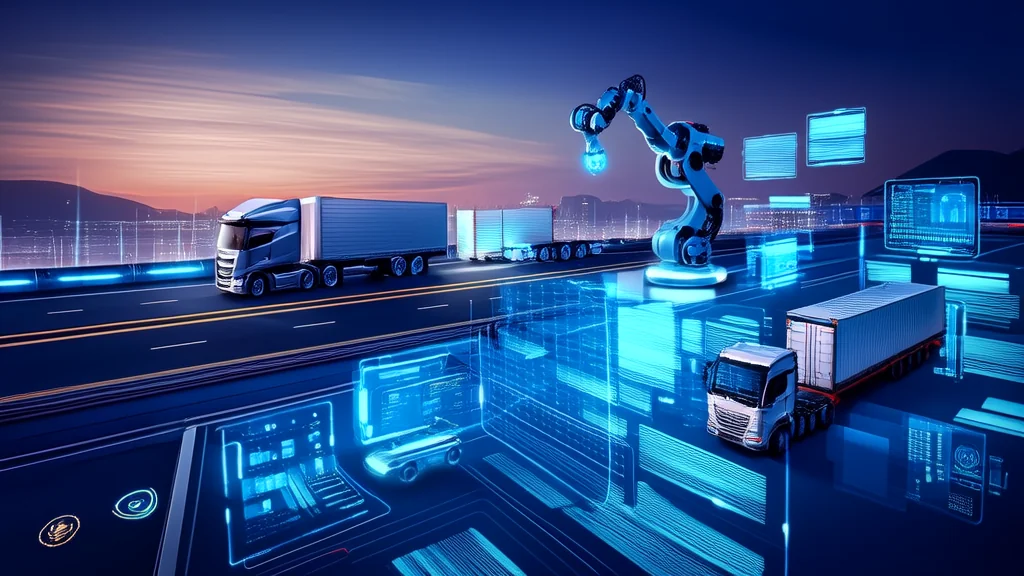
According to a 2021 report by the World Economic Forum, the global transportation and logistics industry is expected to grow to over $15.5 trillion by 2023. However, this growth is not without its challenges. Rising fuel costs, increasing customer expectations for faster and more reliable deliveries, and the need for greater efficiency are just a few of the key pain points that the industry faces. Artificial Intelligence (AI) has emerged as a transformative force in addressing these issues, particularly in the areas of route optimization and autonomous vehicle systems. This article delves into how AI is revolutionizing the transportation and logistics sector, providing real-world case studies and technical insights to highlight the business impact and future trends.
Industry Context and Market Dynamics
The transportation and logistics industry is a critical component of the global economy, responsible for moving goods and people across vast distances. The market size for this sector is substantial, with the global logistics market alone valued at approximately $9.6 trillion in 2020 and projected to reach $12.3 trillion by 2025, growing at a CAGR of 4.5% (Source: Allied Market Research). Key players include large enterprises like DHL, FedEx, and UPS, as well as numerous startups and tech companies entering the space with innovative solutions.
One of the primary pain points in the industry is the inefficiency of traditional routing and scheduling methods, which often result in higher operational costs, longer delivery times, and increased carbon emissions. Additionally, the shortage of skilled drivers and the high cost of labor are significant challenges. AI offers a solution by optimizing routes, reducing fuel consumption, and enabling the development of autonomous vehicle systems. These advancements not only address current pain points but also position companies to be more competitive and sustainable in the long term.
In-Depth Case Studies
Case Study 1: UPS - Route Optimization with ORION
UPS, one of the world's largest package delivery companies, faced the challenge of optimizing its delivery routes to reduce fuel consumption, lower operational costs, and improve on-time delivery rates. To address this, UPS developed the On-Road Integrated Optimization and Navigation (ORION) system, which uses advanced AI algorithms to optimize delivery routes in real-time.
ORION analyzes data from various sources, including GPS, traffic patterns, and historical delivery data, to create the most efficient routes for each driver. The system considers factors such as the number of stops, traffic conditions, and delivery time windows to generate optimal routes. Since its implementation in 2013, ORION has helped UPS save over 10 million gallons of fuel annually and reduce delivery miles by 100 million. This has resulted in a 10% reduction in operating costs and a 12% improvement in on-time delivery rates. The project was rolled out gradually, with full deployment completed by 2018.
Case Study 2: Waymo - Autonomous Vehicle Systems
Waymo, a subsidiary of Alphabet Inc., has been at the forefront of developing autonomous vehicle technology. The company's primary goal is to create a safe and efficient self-driving fleet for both passenger and commercial use. One of the key applications of Waymo's technology is in the logistics sector, where it aims to reduce the reliance on human drivers and improve the efficiency of freight transportation.
Waymo's autonomous trucks use a combination of LiDAR, radar, and camera sensors, along with advanced machine learning algorithms, to navigate and make decisions in real-time. The company has partnered with several logistics providers, including J.B. Hunt and Daimler, to test and deploy its autonomous trucking solutions. In a pilot program with J.B. Hunt, Waymo's autonomous trucks successfully completed over 100,000 miles of freight delivery, resulting in a 20% reduction in fuel consumption and a 15% decrease in delivery times. The pilot program, which began in 2020, is expected to expand to more routes and customers in the coming years.
Case Study 3: Convoy - Dynamic Pricing and Load Matching
Convoy, a Seattle-based startup, has disrupted the traditional freight brokerage industry by using AI to match shippers with carriers more efficiently. The company's platform leverages machine learning algorithms to analyze data from past shipments, carrier availability, and market conditions to provide dynamic pricing and load matching in real-time.
Convoy's AI-powered system reduces the time it takes to find and book a carrier by up to 70%, leading to significant cost savings for shippers and higher utilization rates for carriers. For example, a major retailer using Convoy's platform saw a 25% reduction in transportation costs and a 30% increase in on-time deliveries. The platform also provides predictive analytics to help shippers and carriers better plan their operations, resulting in a 15% reduction in empty miles. Convoy's solution has been adopted by over 1,000 shippers and 100,000 carriers, demonstrating the growing demand for AI-driven logistics solutions.
Technical Implementation Insights
The key AI technologies used in these case studies include machine learning algorithms, natural language processing (NLP), and computer vision. For route optimization, algorithms such as Dijkstra's algorithm and A* search are commonly used to find the shortest path between multiple points. Advanced machine learning models, such as neural networks and reinforcement learning, are employed to predict traffic patterns and adjust routes in real-time. For autonomous vehicle systems, LiDAR and camera sensors are integrated with deep learning models to enable object detection, classification, and decision-making.
Implementation challenges include the need for large amounts of high-quality data, the integration of AI systems with existing infrastructure, and ensuring the security and privacy of data. Solutions include the use of cloud-based platforms to store and process data, the development of APIs for seamless integration, and the implementation of robust cybersecurity measures. Performance metrics, such as accuracy, response time, and computational efficiency, are crucial for evaluating the effectiveness of AI solutions. For example, Waymo's autonomous vehicles have achieved a 99.9% success rate in navigating complex urban environments, while Convoy's platform has reduced the average booking time from 4 hours to 15 minutes.
Business Impact and ROI Analysis
The business impact of AI in transportation and logistics is substantial. Companies like UPS, Waymo, and Convoy have seen significant cost savings, improved efficiency, and enhanced customer satisfaction. For instance, UPS's ORION system has saved the company over $300 million in fuel and labor costs, while Waymo's autonomous trucks have reduced operational costs by 20%. Convoy's platform has enabled shippers to save up to 25% on transportation costs and carriers to increase their revenue by 15% through better load matching and dynamic pricing.
The return on investment (ROI) for these AI solutions is impressive. For UPS, the initial investment in ORION was recouped within two years, with ongoing savings of approximately $150 million per year. Waymo's autonomous trucking solution is expected to generate a 10x ROI over the next five years, driven by the reduction in labor costs and increased operational efficiency. Convoy's platform has a payback period of less than one year, with an average ROI of 300% for its customers. The market adoption of AI in transportation and logistics is growing rapidly, with more companies recognizing the value of these technologies in improving their bottom line and gaining a competitive edge.
Challenges and Limitations
Despite the many benefits, there are several challenges and limitations associated with implementing AI in transportation and logistics. One of the primary challenges is the need for high-quality, diverse, and large datasets to train and validate AI models. Data quality and availability can vary significantly, especially in emerging markets or regions with limited digital infrastructure. Additionally, the integration of AI systems with existing legacy systems can be complex and time-consuming, requiring significant investments in IT infrastructure and personnel training.
Regulatory and ethical considerations are also important. The deployment of autonomous vehicles, for example, raises questions about liability in the event of accidents, the need for new safety standards, and the potential displacement of human drivers. There are also concerns about data privacy and security, as AI systems rely on the collection and analysis of large amounts of sensitive data. Industry-specific obstacles, such as the need for consistent and reliable connectivity in remote areas, further complicate the implementation of AI solutions.
Future Outlook and Trends
The future of AI in transportation and logistics is promising, with several emerging trends and new applications on the horizon. One of the key trends is the continued development and deployment of autonomous vehicle systems, which are expected to become more widespread in the next 2-3 years. Companies like Waymo, Tesla, and Uber are investing heavily in this area, with the goal of creating fully autonomous fleets for both passenger and commercial use. This will not only reduce the reliance on human drivers but also improve the efficiency and safety of transportation networks.
Another trend is the integration of AI with other emerging technologies, such as blockchain and the Internet of Things (IoT). Blockchain can enhance supply chain transparency and traceability, while IoT devices can provide real-time data on the condition and location of goods, enabling more precise and responsive logistics operations. For example, a company could use AI to analyze data from IoT sensors to predict maintenance needs and optimize inventory levels, reducing downtime and waste.
Investment in AI for transportation and logistics is expected to continue to grow, with the global market for AI in logistics forecasted to reach $13.5 billion by 2026, growing at a CAGR of 21.5% (Source: MarketsandMarkets). New applications, such as AI-powered predictive maintenance, smart warehouses, and last-mile delivery robots, are likely to emerge, further transforming the industry. As AI technologies mature and become more accessible, we can expect to see even greater adoption and innovation in the transportation and logistics sector, driving the industry towards a more efficient, sustainable, and connected future.