Introduction and Context
Federated Learning (FL) is a distributed machine learning approach that enables multiple participants to collaboratively train a model without sharing their raw data. This technology is particularly important in scenarios where data privacy and security are paramount, such as in healthcare, finance, and personal devices. Federated Learning was first introduced by Google in 2016, with the publication of the paper "Communication-Efficient Learning of Deep Networks from Decentralized Data" by McMahan et al. The key problem it addresses is the challenge of training machine learning models on sensitive or private data, which cannot be centralized due to privacy concerns, regulatory restrictions, or logistical issues.
The significance of Federated Learning lies in its ability to harness the power of decentralized data while preserving privacy. Traditional machine learning approaches require data to be centralized, which can lead to significant privacy risks and legal challenges. By enabling local training on individual devices or servers, Federated Learning allows for the creation of robust models without compromising the confidentiality of the underlying data. This has led to its adoption in various domains, including mobile applications, edge computing, and collaborative research.
Core Concepts and Fundamentals
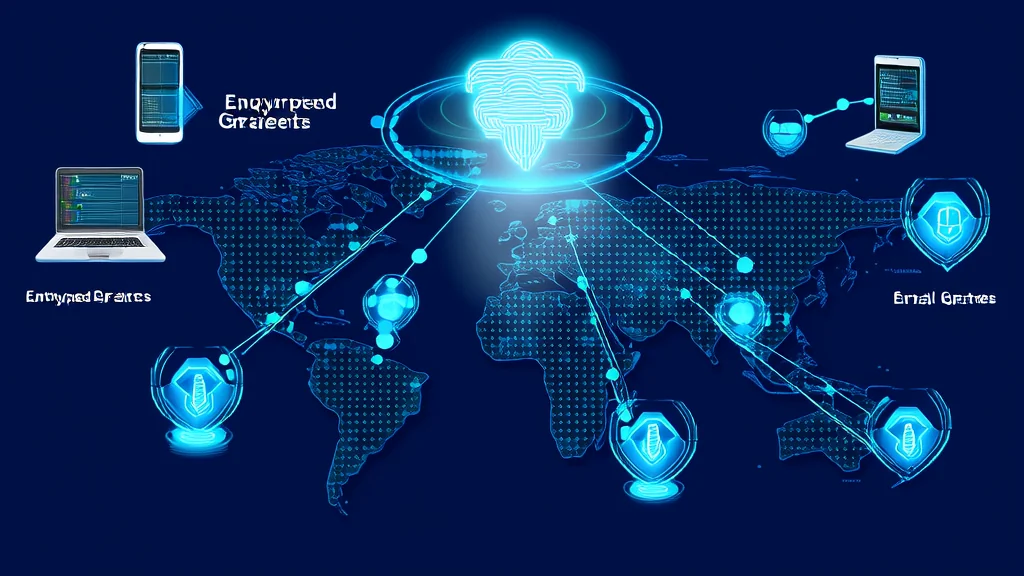
Federated Learning is built on the fundamental principle of decentralized data processing. In this setup, multiple clients (e.g., smartphones, IoT devices, or data centers) each hold a portion of the overall dataset. These clients independently train a local model using their own data, and then share only the model updates (e.g., gradients or parameters) with a central server. The central server aggregates these updates to form a global model, which is then sent back to the clients for further training. This process is repeated iteratively until the global model converges to a satisfactory level of performance.
Key mathematical concepts in Federated Learning include optimization algorithms, such as Stochastic Gradient Descent (SGD), and aggregation methods, such as FedAvg (Federated Averaging). SGD is used to update the local models based on the gradients computed from the local data, while FedAvg averages the local model updates to form the global model. Intuitively, each client computes a small step towards improving the model based on its local data, and the central server combines these steps to move the global model in the right direction.
The core components of a Federated Learning system include the clients, the central server, and the communication protocol. Clients perform local training and send updates to the server, which aggregates these updates and broadcasts the new global model. The communication protocol ensures efficient and secure data exchange between the clients and the server. Federated Learning differs from traditional distributed learning in that it does not require the centralization of raw data, thereby preserving privacy and reducing the risk of data breaches.
An analogy to understand Federated Learning is to think of a group of chefs (clients) who each have a unique recipe (local data). Instead of sharing their recipes, they each make a dish (local model) and send a sample (model update) to a head chef (central server). The head chef tastes all the samples and creates a new, improved recipe (global model) that is then shared back with the group. This process continues until the final recipe is perfected, without any chef ever revealing their original recipe.
Technical Architecture and Mechanics
The architecture of a Federated Learning system typically consists of three main phases: initialization, local training, and global aggregation. During the initialization phase, the central server initializes a global model and distributes it to the clients. Each client then performs local training using its own data, updating the model parameters based on the local gradients. After a certain number of local training iterations, the clients send their updated model parameters to the central server. The central server aggregates these updates to form a new global model, which is then broadcast back to the clients for the next round of training.
For instance, in a Federated Averaging (FedAvg) algorithm, the central server initializes a global model w_0 and sends it to the clients. Each client k trains the model on its local data for E epochs, resulting in a local model w_k. The client then sends the difference Δw_k = w_k - w_0 to the server. The server aggregates these differences using a weighted average, where the weights are proportional to the amount of data each client has. The new global model w_{t+1} is then computed as:
w_{t+1} = w_t + \sum_{k=1}^K \frac{n_k}{n} Δw_k
where n_k is the number of data points on client k, and n is the total number of data points across all clients. This process is repeated for multiple rounds until the global model converges.
Key design decisions in Federated Learning include the choice of local training epochs, the frequency of communication, and the aggregation method. For example, increasing the number of local epochs can reduce the communication overhead but may also increase the risk of divergence if the local models become too different. The frequency of communication is another critical factor, as more frequent communication can improve convergence but at the cost of increased network traffic. Aggregation methods, such as FedAvg, FedProx, and FedAdam, each have their own trade-offs in terms of convergence speed, stability, and computational efficiency.
Technical innovations in Federated Learning include the use of differential privacy, secure multi-party computation, and homomorphic encryption to further enhance privacy. Differential privacy adds noise to the model updates to ensure that the contributions of individual data points cannot be discerned. Secure multi-party computation allows clients to jointly compute the global model without revealing their local data. Homomorphic encryption enables computations to be performed on encrypted data, ensuring that the data remains confidential even during the aggregation process.
For example, the paper "Advances and Open Problems in Federated Learning" by Kairouz et al. discusses the use of differential privacy in Federated Learning. By adding calibrated noise to the model updates, the system can provide strong privacy guarantees while still achieving good model performance. This approach has been implemented in systems like TensorFlow Federated (TFF) and PySyft, which provide tools for building and deploying privacy-preserving Federated Learning models.
Advanced Techniques and Variations
Modern variations of Federated Learning include personalized Federated Learning, hierarchical Federated Learning, and split learning. Personalized Federated Learning aims to create models that are tailored to the specific needs of individual clients, rather than a single global model. This is achieved by incorporating client-specific information into the training process, such as through meta-learning or multi-task learning. Hierarchical Federated Learning extends the basic FL framework to a multi-level structure, where intermediate aggregators are used to reduce the communication load on the central server. Split learning, on the other hand, divides the model into two parts: a common feature extractor and a client-specific classifier. The feature extractor is trained centrally, while the classifiers are trained locally, allowing for more efficient and scalable training.
State-of-the-art implementations of Federated Learning often incorporate advanced techniques to address specific challenges. For example, the paper "FedProx: Federated Optimization in Heterogeneous Networks" by Li et al. introduces the FedProx algorithm, which uses a proximal term to regularize the local updates and improve convergence in heterogeneous settings. Another notable approach is the use of adaptive learning rates, such as in the FedAdam algorithm, which dynamically adjusts the learning rate based on the local and global gradients to accelerate convergence.
Different approaches to Federated Learning have their own trade-offs. Personalized Federated Learning can achieve better performance on individual clients but may require more complex training procedures and higher computational resources. Hierarchical Federated Learning reduces the communication overhead but may introduce additional latency and complexity. Split learning offers a balance between centralization and decentralization, but it requires careful design of the feature extractor and classifier to ensure effective collaboration.
Recent research developments in Federated Learning include the integration of reinforcement learning, the use of federated transfer learning, and the development of federated generative models. Reinforcement learning can be used to optimize the training process, such as by dynamically adjusting the local training epochs or the communication frequency. Federated transfer learning leverages pre-trained models to initialize the local models, reducing the training time and improving the performance. Federated generative models, such as federated GANs, enable the generation of synthetic data that preserves the statistical properties of the original data while maintaining privacy.
Practical Applications and Use Cases
Federated Learning is being used in a variety of practical applications, including mobile keyboard prediction, health monitoring, and financial fraud detection. For example, Google's Gboard uses Federated Learning to improve the accuracy of its predictive text suggestions. By training a language model on the typing patterns of millions of users, Gboard can provide more accurate and personalized predictions without accessing the raw text data. Similarly, in the healthcare domain, Federated Learning is being used to develop predictive models for disease diagnosis and treatment planning. By training models on decentralized patient data, researchers can create more accurate and generalizable models while ensuring patient privacy.
Another notable application is in the field of financial services, where Federated Learning is used to detect fraudulent transactions. Banks and financial institutions can collaborate to train a global fraud detection model using their respective transaction data, without sharing the actual transaction details. This approach not only enhances the model's performance but also complies with strict data privacy regulations, such as GDPR and CCPA.
Federated Learning is suitable for these applications because it allows for the creation of high-quality models while preserving the privacy and security of the underlying data. The decentralized nature of the training process also makes it more resilient to data breaches and cyber-attacks. In practice, Federated Learning has been shown to achieve comparable or even superior performance to traditional centralized learning, especially in scenarios with highly diverse and non-IID (independent and identically distributed) data.
Technical Challenges and Limitations
Despite its many advantages, Federated Learning faces several technical challenges and limitations. One of the primary challenges is the heterogeneity of the data and the clients. In real-world scenarios, the data distribution across clients can be highly non-uniform, leading to issues such as data imbalance and concept drift. This can result in poor convergence and suboptimal model performance. To address this, techniques such as FedProx and FedAvgM have been developed to handle heterogeneous data and improve the robustness of the training process.
Another significant challenge is the computational and communication requirements of Federated Learning. Training large models on resource-constrained devices, such as smartphones or IoT devices, can be computationally expensive and time-consuming. Additionally, the frequent communication between clients and the central server can lead to high network traffic and increased latency. To mitigate these issues, techniques such as model compression, sparsification, and asynchronous communication have been proposed. Model compression reduces the size of the model, making it more efficient to train and communicate. Sparsification involves sending only the most important model updates, reducing the communication overhead. Asynchronous communication allows clients to send updates at different times, reducing the need for synchronized communication.
Scalability is another major challenge in Federated Learning. As the number of clients and the size of the data increase, the system becomes more complex and harder to manage. Ensuring efficient and fair participation of all clients, managing the communication and computation load, and handling failures and dropouts are all critical issues that need to be addressed. Research directions in this area include the development of more efficient algorithms, the use of hierarchical and peer-to-peer architectures, and the integration of advanced networking technologies, such as 5G and edge computing.
Future Developments and Research Directions
Emerging trends in Federated Learning include the integration of advanced machine learning techniques, the development of more efficient and scalable algorithms, and the exploration of new application domains. One active research direction is the use of reinforcement learning to optimize the Federated Learning process. By treating the training process as a sequential decision-making problem, reinforcement learning can be used to dynamically adjust the training parameters, such as the local training epochs, the communication frequency, and the aggregation method. This can lead to more efficient and adaptive training, improving both the performance and the scalability of the system.
Another promising area of research is the development of federated transfer learning and federated generative models. Federated transfer learning leverages pre-trained models to initialize the local models, reducing the training time and improving the performance. Federated generative models, such as federated GANs, enable the generation of synthetic data that preserves the statistical properties of the original data while maintaining privacy. These models can be used for data augmentation, anomaly detection, and other tasks that require access to large and diverse datasets.
Potential breakthroughs on the horizon include the development of fully decentralized Federated Learning systems, where the central server is eliminated, and the clients collaborate directly with each other. This would further enhance the privacy and security of the system, as there would be no single point of failure or control. Additionally, the integration of Federated Learning with other emerging technologies, such as blockchain and quantum computing, could lead to new and innovative applications, such as secure and transparent data sharing, and ultra-fast and secure model training.
From an industry perspective, the adoption of Federated Learning is expected to grow as more organizations recognize the importance of data privacy and the benefits of decentralized learning. Companies like Google, Apple, and Microsoft are already investing heavily in Federated Learning, and we can expect to see more commercial products and services based on this technology in the coming years. From an academic perspective, Federated Learning is a rich and dynamic field, with ongoing research in areas such as algorithm design, privacy preservation, and system architecture. As the technology continues to evolve, it has the potential to transform the way we train and deploy machine learning models, making them more accessible, efficient, and secure.