Opening Hook
According to the United Nations, the world's population is projected to reach 9.7 billion by 2050, putting immense pressure on the agricultural sector to produce more food with limited resources. In this context, the integration of Artificial Intelligence (AI) in agriculture is not just a technological advancement but a necessity. AI-driven precision agriculture can help farmers optimize crop yields, reduce resource waste, and increase profitability. This article delves into how AI is transforming the agricultural landscape, focusing on real-world case studies that demonstrate the tangible benefits of AI in crop yield optimization.
Industry Context and Market Dynamics
The global precision agriculture market was valued at approximately $6.8 billion in 2021 and is expected to grow at a compound annual growth rate (CAGR) of 13.5% from 2022 to 2028. This growth is driven by the increasing need for sustainable farming practices, the rising demand for food, and the adoption of advanced technologies. Key pain points in the agricultural industry include inefficient use of water and fertilizers, labor shortages, and the impact of climate change on crop yields. AI addresses these challenges by providing data-driven insights, predictive analytics, and automated solutions.
The competitive landscape in the AI for agriculture market includes both established tech giants and innovative startups. Companies like Google, Microsoft, and Amazon are leveraging their cloud and AI capabilities to offer comprehensive solutions. Startups such as FarmWise and Blue River Technology are also making significant contributions with specialized AI applications. The market is characterized by a mix of hardware, software, and service offerings, each tailored to specific agricultural needs.
In-Depth Case Studies
Case Study 1: John Deere and Blue River Technology
John Deere, a leading manufacturer of agricultural machinery, acquired Blue River Technology in 2017. Blue River's See & Spray technology uses computer vision and machine learning to identify and spray individual plants, reducing herbicide use by up to 90%. This solution was implemented on John Deere's sprayers, which were equipped with high-resolution cameras and AI algorithms. The system can distinguish between crops and weeds in real-time, applying herbicides only where needed. Over a two-year period, farmers using this technology reported a 35% reduction in herbicide costs and a 15% increase in crop yields. The implementation timeline included a pilot phase in 2018, followed by a full-scale rollout in 2019.
Case Study 2: Microsoft and Azure FarmBeats
Microsoft's Azure FarmBeats is a platform that uses AI and IoT to provide data-driven insights for precision agriculture. One of its key features is the ability to create detailed soil maps using satellite imagery and ground sensors. These maps help farmers understand soil moisture levels, nutrient content, and other critical factors. A large-scale farm in California implemented Azure FarmBeats in 2020. The farm used the platform to optimize irrigation and fertilizer application, resulting in a 28% reduction in water usage and a 20% increase in crop yield. The project took six months to implement, with ongoing support and updates provided by Microsoft. The farm also reported a 15% decrease in operational costs due to more efficient resource management.
Case Study 3: FarmWise and Autonomous Weeding Robots
FarmWise, a startup based in San Francisco, developed autonomous weeding robots that use AI and computer vision to remove weeds without damaging crops. The robots are equipped with high-resolution cameras and deep learning algorithms that can identify and differentiate between crops and weeds. In a trial conducted in 2021, a lettuce farm in Salinas, California, deployed FarmWise's robots. The farm saw a 40% reduction in labor costs and a 10% increase in crop yield. The robots were able to work 24/7, even in challenging weather conditions, providing consistent and precise weeding. The implementation timeline included a three-month pilot phase, followed by a full deployment over the next six months.
Technical Implementation Insights
The key AI technologies used in these case studies include computer vision, machine learning, and deep learning. Computer vision algorithms, such as those used by Blue River Technology and FarmWise, rely on convolutional neural networks (CNNs) to process and analyze images. These models are trained on large datasets of labeled images to accurately identify and classify plants. Machine learning models, such as those used in Azure FarmBeats, leverage regression and classification algorithms to predict soil conditions and crop health based on sensor data and satellite imagery.
Implementation challenges include the need for high-quality training data, the complexity of integrating AI systems with existing farm equipment, and the requirement for robust data processing and storage. Solutions include the use of edge computing to process data locally, reducing latency and bandwidth requirements. Additionally, cloud platforms like Microsoft Azure and Amazon Web Services (AWS) provide scalable infrastructure and tools for data management and model training. Performance metrics, such as accuracy, precision, and recall, are used to evaluate the effectiveness of AI models, and benchmarks are established to ensure consistent performance across different environments.
Business Impact and ROI Analysis
The business benefits of AI in precision agriculture are substantial. For example, John Deere's See & Spray technology not only reduced herbicide costs by 35% but also increased crop yields by 15%, leading to a significant return on investment (ROI). Similarly, the California farm using Azure FarmBeats saw a 28% reduction in water usage and a 20% increase in crop yield, resulting in a 15% decrease in operational costs. The lettuce farm in Salinas, California, experienced a 40% reduction in labor costs and a 10% increase in crop yield through the use of FarmWise's autonomous weeding robots.
Market adoption trends indicate a growing acceptance of AI in agriculture, driven by the tangible benefits and the need for sustainable farming practices. Companies that adopt AI solutions early are likely to gain a competitive advantage, as they can achieve higher yields, lower costs, and improved resource efficiency. The ROI for these solutions is typically realized within 1-2 years, making them an attractive investment for farmers and agribusinesses.
Challenges and Limitations
Despite the numerous benefits, there are several challenges and limitations to the implementation of AI in agriculture. Technical challenges include the need for high-quality, labeled training data, which can be time-consuming and expensive to collect. Additionally, AI models must be continuously updated and retrained to adapt to changing environmental conditions and new crop varieties. Regulatory and ethical considerations, such as data privacy and the potential for job displacement, also need to be addressed. Industry-specific obstacles, such as the variability of soil and weather conditions, can affect the performance of AI systems and require robust testing and validation.
Another challenge is the initial cost of implementing AI solutions, which can be a barrier for small and medium-sized farms. However, as the technology becomes more widespread and the cost of hardware and software decreases, it is expected that more farmers will be able to benefit from AI-driven precision agriculture.
Future Outlook and Trends
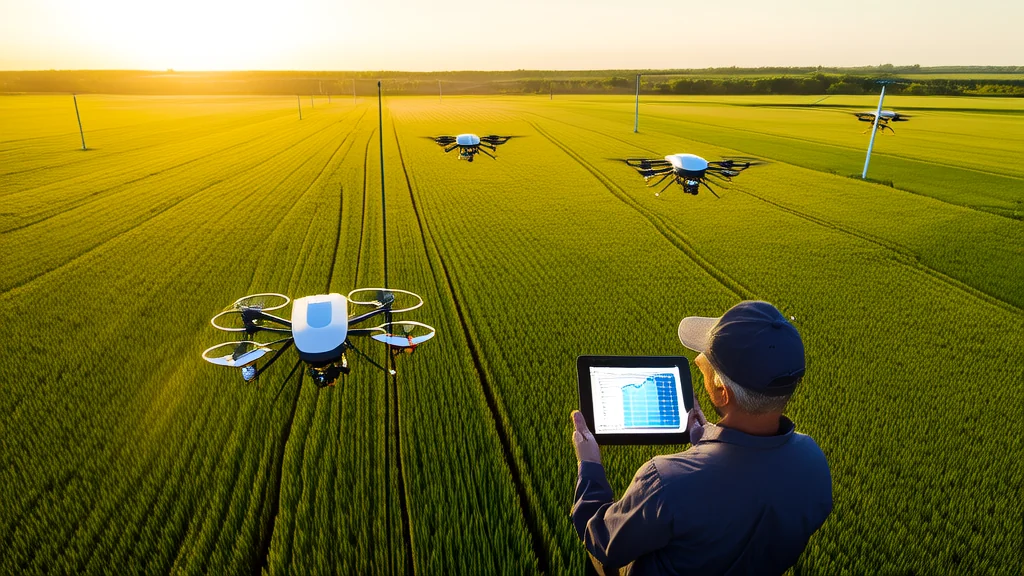
Emerging trends in AI for agriculture include the use of drones and satellite imagery for real-time monitoring, the integration of AI with blockchain for supply chain transparency, and the development of more advanced AI models for predictive analytics. Over the next 2-3 years, it is expected that AI will become even more integrated into farm operations, with the potential for new applications in areas such as pest and disease detection, crop breeding, and climate resilience. Investment in AI for agriculture is also expected to increase, with venture capital and private equity firms showing growing interest in the sector.
Potential new applications include the use of AI to optimize crop rotation and diversification, as well as the development of AI-powered decision support systems for farmers. These systems could provide real-time recommendations on planting, harvesting, and resource management, further enhancing the efficiency and sustainability of agricultural practices. As the technology continues to evolve, the future of agriculture looks increasingly data-driven and AI-enabled, with the potential to address some of the most pressing challenges facing the industry.