Opening Hook
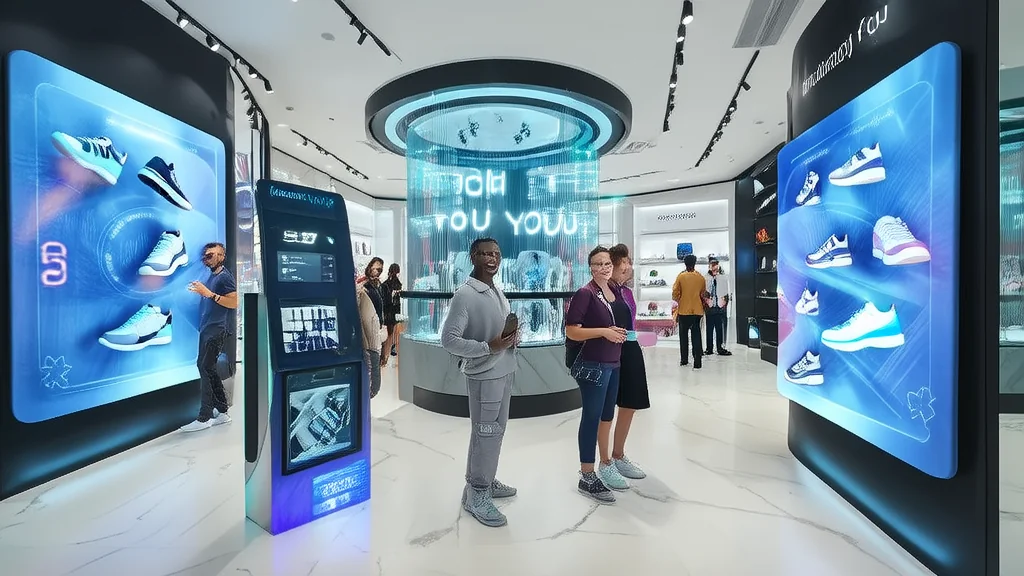
According to a recent study by McKinsey, companies that effectively use AI in their operations can increase their revenue by 5-10% and reduce costs by 20-25%. In the retail sector, one of the most transformative applications of AI is in recommendation engines, which have become a cornerstone for enhancing customer experience and driving sales. Retailers are leveraging AI to provide personalized recommendations, optimize inventory, and streamline operations, ultimately leading to higher customer satisfaction and increased profitability.
Industry Context and Market Dynamics
The global retail market is projected to reach $36.5 trillion by 2025, with e-commerce accounting for a significant portion of this growth. The rise of online shopping has intensified competition, making it crucial for retailers to offer personalized and seamless experiences to retain customers. Key pain points in the retail industry include high customer acquisition costs, low customer retention rates, and the challenge of providing relevant product recommendations at scale. AI-driven recommendation engines address these issues by analyzing vast amounts of customer data to deliver tailored suggestions, thereby improving engagement and conversion rates.
The competitive landscape in retail is highly dynamic, with both established players like Amazon and Walmart, as well as emerging startups, vying for market share. Companies that successfully integrate AI into their operations often gain a significant edge, as they can better understand and meet the needs of their customers. For instance, Amazon's recommendation engine, which uses machine learning algorithms, is estimated to drive 35% of its sales, highlighting the potential impact of AI in this domain.
In-Depth Case Studies
Case Study 1: Amazon - Personalized Product Recommendations
Amazon, a pioneer in e-commerce, has long been at the forefront of using AI for personalization. One of their key innovations is the recommendation engine, which analyzes customer browsing and purchase history, along with other data points, to suggest relevant products. The company uses a combination of collaborative filtering, content-based filtering, and deep learning models to generate these recommendations. For example, their "Frequently Bought Together" and "Customers Who Viewed This Item Also Viewed" features are powered by AI.
Implementation of these AI solutions has led to significant business benefits. According to a report by McKinsey, Amazon's recommendation system drives 35% of its sales, contributing to an estimated $29 billion in additional revenue. The timeline for implementing such a system can vary, but Amazon's continuous investment in AI research and development has allowed them to refine and enhance their recommendation engine over time.
Case Study 2: Stitch Fix - Data-Driven Styling and Personalization
Stitch Fix, an online personal styling service, leverages AI to provide customized clothing recommendations to its customers. The company combines data from style quizzes, customer feedback, and stylist input to create personalized outfits. Stitch Fix uses a variety of AI techniques, including natural language processing (NLP) to analyze customer feedback and machine learning algorithms to predict fashion trends and match items to individual preferences.
The results have been impressive. Stitch Fix reported a 28% increase in accuracy in matching items to customer preferences, leading to higher customer satisfaction and reduced return rates. The implementation of these AI solutions involved integrating the technology with existing systems, such as the company's inventory management and logistics platforms. The entire process, from initial development to full-scale deployment, took approximately 18 months, with ongoing improvements and updates.
Case Study 3: Sephora - Enhanced Customer Experience through AI
Sephora, a leading beauty retailer, has implemented AI to enhance the in-store and online shopping experience. Their "Virtual Artist" feature, powered by augmented reality (AR) and machine learning, allows customers to try on makeup virtually and receive personalized product recommendations. Additionally, Sephora uses AI to analyze customer data and provide tailored skincare and makeup advice.
The implementation of these AI solutions has resulted in a 20% increase in customer engagement and a 15% boost in sales. The Virtual Artist feature, in particular, has been a hit, with over 1 million users trying it out. The project was developed in collaboration with ModiFace, a leading AR and AI company, and the integration with Sephora's existing systems was completed within a year. The success of this initiative has positioned Sephora as a leader in using technology to improve the customer experience in the beauty industry.
Technical Implementation Insights
The key AI technologies used in recommendation engines include collaborative filtering, content-based filtering, and deep learning models. Collaborative filtering involves analyzing user behavior and preferences to make recommendations based on similar users. Content-based filtering, on the other hand, focuses on the attributes of the items themselves, suggesting products that are similar to those a user has previously liked or purchased. Deep learning models, such as neural networks, can handle more complex data and provide more accurate and nuanced recommendations.
Implementing these AI solutions comes with its own set of challenges. One of the primary challenges is the need for large, high-quality datasets to train the models effectively. Additionally, integrating AI with existing systems, such as CRM and inventory management, requires careful planning and coordination. Performance metrics, such as precision, recall, and F1 score, are used to evaluate the effectiveness of the recommendation engine. Continuous monitoring and refinement are essential to ensure the system remains accurate and relevant over time.
Business Impact and ROI Analysis
The business impact of AI-driven recommendation engines is substantial. Companies like Amazon, Stitch Fix, and Sephora have seen significant increases in sales, customer engagement, and overall satisfaction. For example, Amazon's recommendation engine contributes to an estimated 35% of its sales, while Stitch Fix has reported a 28% increase in accuracy in matching items to customer preferences. These improvements translate into higher revenue and lower operational costs, resulting in a strong return on investment (ROI).
Market adoption of AI in retail is on the rise, with more companies recognizing the value of personalized recommendations. According to a survey by PwC, 71% of consumers say they prefer to shop with brands that provide personalized offers. This trend is expected to continue, with AI becoming a standard tool in the retail industry. Companies that invest in AI early and effectively will likely gain a competitive advantage, as they can better understand and meet the needs of their customers.
Challenges and Limitations
Despite the many benefits, there are real challenges and limitations to implementing AI in retail. One of the main challenges is the need for high-quality, diverse, and extensive datasets to train the models. Data privacy and security concerns also play a significant role, as companies must ensure that customer data is protected and used ethically. Additionally, the integration of AI with existing systems can be complex and time-consuming, requiring significant resources and expertise.
Regulatory and ethical considerations are also important. For example, the General Data Protection Regulation (GDPR) in the European Union imposes strict requirements on how companies can collect, store, and use customer data. Ensuring compliance with these regulations is crucial to avoid legal and reputational risks. Furthermore, the potential for bias in AI algorithms is a growing concern, and companies must take steps to mitigate this risk, such as regularly auditing and testing their models.
Future Outlook and Trends
Emerging trends in AI for retail include the use of more advanced machine learning techniques, such as reinforcement learning and generative adversarial networks (GANs), to further improve the accuracy and relevance of recommendations. Additionally, the integration of AI with other technologies, such as the Internet of Things (IoT) and augmented reality (AR), is expected to create new and innovative applications. For example, smart mirrors in fitting rooms that use AI to provide personalized styling advice are already being tested by some retailers.
Investment in AI for retail is expected to grow significantly over the next 2-3 years. According to a report by MarketsandMarkets, the global AI in retail market is projected to reach $19.9 billion by 2025, growing at a CAGR of 28.5% from 2020 to 2025. As more companies recognize the potential of AI to drive growth and improve the customer experience, we can expect to see increased adoption and innovation in this space. The future of retail is likely to be characterized by highly personalized and seamless experiences, powered by AI and other cutting-edge technologies.