Introduction and Context
Federated Learning (FL) is a distributed machine learning approach that enables multiple participants to collaboratively train a model without sharing their raw data. This technology was developed to address the growing concerns around data privacy and security, particularly in scenarios where sensitive information is involved. The concept of FL was first introduced by Google in 2016, with the publication of "Communication-Efficient Learning of Deep Networks from Decentralized Data" by McMahan et al. Since then, it has gained significant traction in both academia and industry.
The primary problem that federated learning solves is the need to train machine learning models on decentralized data. Traditional centralized training methods require all data to be aggregated into a single location, which can be impractical or even impossible due to privacy regulations, data ownership, and logistical constraints. Federated learning allows for the creation of a global model that benefits from the collective knowledge of all participants while keeping the data local. This is particularly important in fields such as healthcare, finance, and consumer electronics, where data privacy is a critical concern.
Core Concepts and Fundamentals
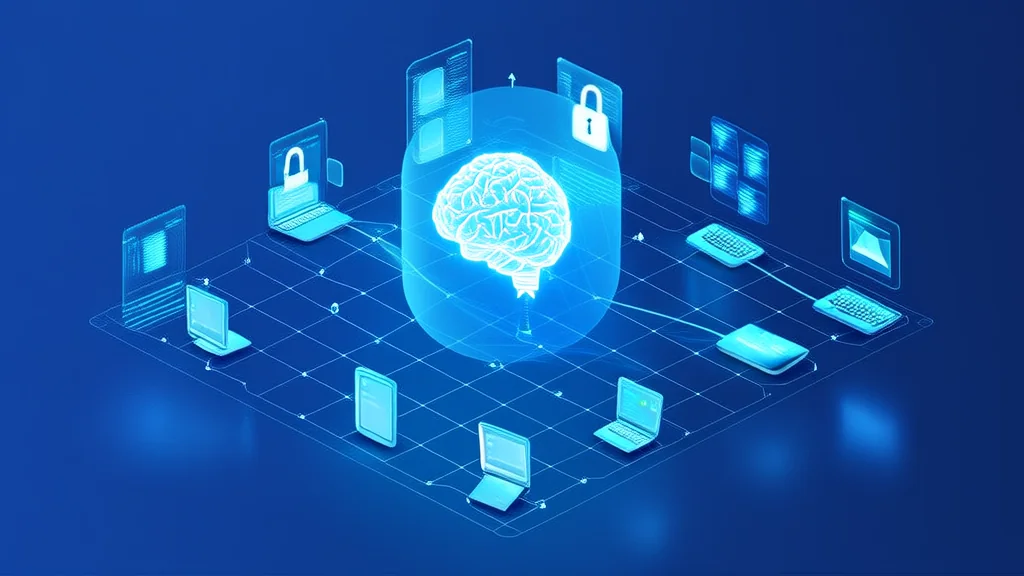
Federated learning is built on the fundamental principles of distributed computing and privacy-preserving techniques. The core idea is to distribute the training process across multiple devices or servers, each holding a portion of the data. These devices, known as clients, perform local training on their data and then send only the updated model parameters (or gradients) to a central server. The central server aggregates these updates to form a global model, which is then sent back to the clients for further training. This iterative process continues until the model converges.
Key mathematical concepts in federated learning include optimization algorithms, such as Stochastic Gradient Descent (SGD), and aggregation methods, such as Federated Averaging (FedAvg). FedAvg, for example, is a simple yet effective method that averages the model updates from all clients. Intuitively, this can be thought of as a way to find the "average" solution that works well across all the different data distributions.
The core components of a federated learning system include:
- Clients: Devices or servers that hold the local data and perform local training.
- Central Server: A server that aggregates the model updates from the clients and distributes the global model.
- Communication Protocol: The mechanism for exchanging model updates between clients and the central server.
- Privacy-Preserving Techniques: Methods to ensure that the data remains private, such as differential privacy and secure multi-party computation.
Federated learning differs from related technologies like distributed learning and edge computing in that it explicitly focuses on preserving data privacy. In distributed learning, data may still be shared or aggregated, whereas in edge computing, the focus is on offloading computation to edge devices rather than on privacy.
Technical Architecture and Mechanics
The technical architecture of federated learning involves a series of steps that are executed iteratively. Here is a detailed explanation of how the technology works:
- Initialization: The central server initializes the global model and sends it to the clients. This initial model can be a randomly initialized model or a pre-trained model, depending on the specific application.
- Local Training: Each client performs local training on its data using the global model. This typically involves running several epochs of SGD or another optimization algorithm. For instance, in a transformer model, the attention mechanism calculates the relevance of different parts of the input data, and the local training updates the weights based on these calculations.
- Model Update Computation: After local training, each client computes the difference between the updated local model and the initial global model. This difference, often referred to as the gradient or model update, is what will be sent to the central server.
- Aggregation: The central server collects the model updates from the clients and aggregates them to form a new global model. The most common aggregation method is FedAvg, which simply averages the updates. However, more sophisticated methods, such as weighted averaging based on the number of data points, can also be used.
- Global Model Update: The central server updates the global model with the aggregated updates and sends the new global model back to the clients. This step ensures that the global model incorporates the knowledge from all the clients.
- Iteration: The process repeats from step 2, with the clients performing local training on the new global model. The iterations continue until the model converges, as determined by a predefined stopping criterion, such as a maximum number of rounds or a threshold on the change in the model parameters.
Key design decisions in federated learning include the choice of the communication protocol, the frequency of model updates, and the aggregation method. For example, the communication protocol must balance the need for frequent updates with the constraints of limited bandwidth and high latency. The frequency of model updates can be adjusted based on the availability of the clients and the stability of the network. The aggregation method, such as FedAvg, is chosen for its simplicity and effectiveness, but more advanced methods, such as adaptive weighting, can be used to handle non-IID (independent and identically distributed) data.
Technical innovations in federated learning include the use of differential privacy to add noise to the model updates, thereby ensuring that individual data points cannot be inferred. Another innovation is the use of secure multi-party computation (MPC) to perform the aggregation in a way that no single party can see the other parties' data. These techniques are crucial for maintaining the privacy and security of the data.
For instance, in a recent paper titled "Advances and Open Problems in Federated Learning," the authors discuss the use of differential privacy and MPC to enhance the privacy guarantees of federated learning. They also highlight the importance of addressing the challenges of non-IID data and system heterogeneity, which are common in real-world applications.
Advanced Techniques and Variations
Modern variations and improvements in federated learning aim to address the challenges of non-IID data, system heterogeneity, and communication efficiency. One such variation is Federated Averaging with Adaptive Weighting (FedAW), which assigns different weights to the model updates based on the quality and quantity of the local data. This helps to mitigate the effects of non-IID data and improve the convergence of the global model.
Another state-of-the-art implementation is Federated Learning with Differential Privacy (DP-FL). DP-FL adds noise to the model updates to ensure that the contributions of individual data points cannot be distinguished. This technique is particularly useful in scenarios where the data is highly sensitive, such as in healthcare applications. For example, the paper "Deep Learning with Differential Privacy" by Abadi et al. demonstrates the effectiveness of DP-FL in training deep neural networks while preserving privacy.
Different approaches to federated learning have their trade-offs. For example, while FedAvg is simple and computationally efficient, it may not perform well on non-IID data. On the other hand, FedAW and DP-FL offer better performance on non-IID data but at the cost of increased computational complexity and communication overhead. Recent research developments, such as FedProx and Scaffold, aim to address these trade-offs by providing more robust and efficient solutions. FedProx, for instance, introduces a proximal term to the local objective function, which helps to stabilize the training process and improve convergence.
Comparison of different methods shows that the choice of the federated learning approach depends on the specific requirements of the application. For example, in a scenario with homogeneous data and stable network conditions, FedAvg may be the best choice. However, in a scenario with non-IID data and high privacy requirements, DP-FL or FedAW may be more appropriate.
Practical Applications and Use Cases
Federated learning is being used in a variety of practical applications, ranging from mobile devices to healthcare systems. One of the most prominent use cases is in the development of personalized recommendation systems. For example, Google uses federated learning to improve the next-word prediction feature in Gboard, the keyboard app for Android. By training the model on the text entered by users, the system can provide more accurate and contextually relevant suggestions without accessing the user's raw data.
In the healthcare domain, federated learning is being used to develop predictive models for disease diagnosis and treatment. For instance, the paper "Federated Learning for Healthcare: A Survey" by Yang et al. discusses the use of federated learning in various healthcare applications, such as predicting patient outcomes and detecting diseases from medical images. These applications benefit from the ability to train models on large, diverse datasets while preserving the privacy of the patients' data.
Federated learning is suitable for these applications because it allows for the creation of a global model that leverages the collective knowledge of all participants while keeping the data local. This is particularly important in healthcare, where data privacy and security are paramount. The performance characteristics of federated learning in practice depend on the specific implementation and the nature of the data. In general, federated learning can achieve comparable or even superior performance to centralized learning, especially when the data is non-IID and the privacy requirements are strict.
Technical Challenges and Limitations
Despite its many advantages, federated learning faces several technical challenges and limitations. One of the main challenges is the handling of non-IID data. In many real-world scenarios, the data distribution across the clients can be highly heterogeneous, leading to poor model performance and slow convergence. To address this, researchers have proposed various techniques, such as adaptive weighting and regularization, but these methods often come with increased computational complexity.
Another challenge is the communication overhead. Federated learning requires frequent communication between the clients and the central server, which can be a bottleneck in scenarios with limited bandwidth or high latency. Techniques such as model compression and quantization can help to reduce the communication overhead, but they may also affect the model's accuracy. Additionally, the scalability of federated learning is a concern, as the number of clients and the size of the data can grow significantly, making the coordination and synchronization of the training process more complex.
Research directions addressing these challenges include the development of more efficient communication protocols, the use of advanced optimization algorithms, and the integration of hardware accelerators. For example, the paper "Communication-Efficient Federated Learning via Deep Partition Aggregation" by Li et al. proposes a method to partition the model and aggregate the updates in a way that reduces the communication overhead. Another direction is the use of meta-learning and transfer learning to improve the adaptability of the model to different data distributions.
Future Developments and Research Directions
Emerging trends in federated learning include the integration of federated learning with other advanced AI techniques, such as reinforcement learning and generative models. For example, Federated Reinforcement Learning (FRL) aims to train reinforcement learning agents in a distributed manner, allowing for the development of more robust and adaptable policies. Similarly, Federated Generative Adversarial Networks (FGANs) enable the training of generative models on decentralized data, opening up new possibilities for data synthesis and augmentation.
Active research directions in federated learning include the development of more efficient and scalable algorithms, the enhancement of privacy-preserving techniques, and the exploration of new applications. For instance, the use of federated learning in autonomous driving and smart cities is an area of growing interest, as it can enable the collaborative training of models on large, diverse datasets while ensuring the privacy of the data. Potential breakthroughs on the horizon include the development of federated learning frameworks that can handle dynamic and evolving data distributions, as well as the integration of federated learning with emerging technologies such as quantum computing and neuromorphic computing.
From an industry perspective, the adoption of federated learning is expected to increase as more organizations recognize the importance of data privacy and the benefits of collaborative learning. Academic research is likely to continue to drive innovation in this area, with a focus on addressing the technical challenges and expanding the range of applications. Overall, federated learning is poised to play a significant role in the future of distributed machine learning, enabling the creation of more powerful, privacy-preserving, and scalable AI systems.