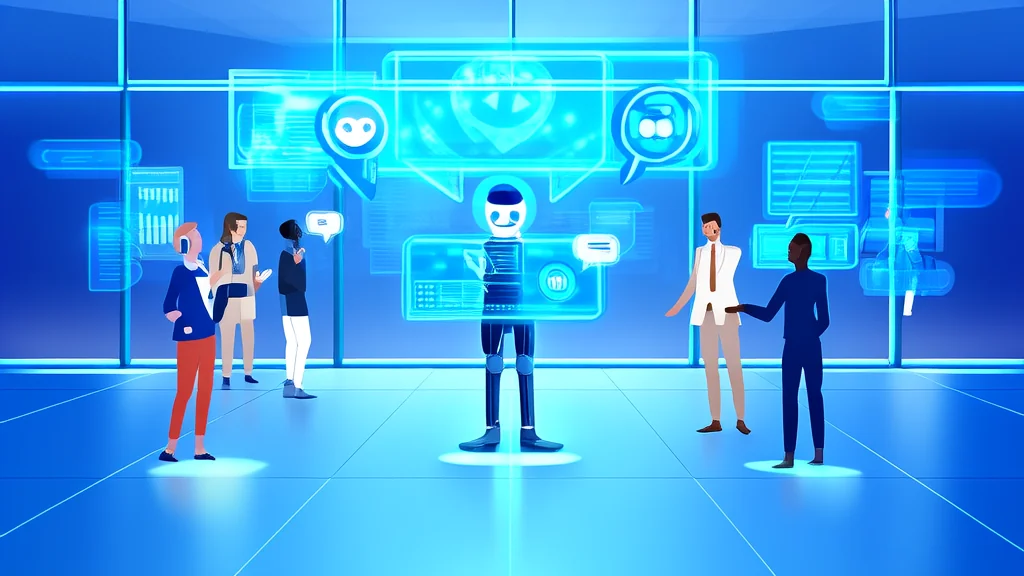
Opening Hook
According to a recent report by Gartner, 85% of customer interactions will be managed without a human by 2025. This statistic underscores the rapid transformation of customer service through artificial intelligence (AI). As businesses strive to enhance customer satisfaction and reduce operational costs, AI-powered chatbots and automated support systems are becoming indispensable. This article delves into the impact of AI in customer service automation, focusing on real-world case studies and the business value they deliver.
Industry Context and Market Dynamics
The customer service industry is undergoing a significant shift, driven by the increasing demand for 24/7 support and personalized experiences. The global market for AI in customer service is projected to reach $13.4 billion by 2025, growing at a CAGR of 28.5% from 2020 to 2025. Key pain points that AI addresses include long wait times, inconsistent service quality, and high operational costs. Companies like Google, Microsoft, and Amazon are leading the charge, but startups are also making significant contributions. The competitive landscape is diverse, with solutions ranging from simple chatbots to complex, AI-driven platforms.
In-Depth Case Studies
Case Study 1: Delta Airlines
Delta Airlines faced a significant challenge in managing the high volume of customer inquiries, especially during peak travel seasons. The company implemented an AI-powered chatbot named "Delta View" to handle common queries, such as flight status, baggage tracking, and check-in procedures. The chatbot was built using natural language processing (NLP) and machine learning algorithms, allowing it to understand and respond to customer inquiries accurately. Within six months of implementation, Delta reported a 25% reduction in call center volume, a 30% decrease in average handling time, and a 15% increase in customer satisfaction scores. The chatbot also provided valuable insights into customer behavior, enabling Delta to make data-driven decisions to improve their services.
Case Study 2: H&M
H&M, a global fashion retailer, aimed to enhance its online shopping experience by providing personalized recommendations and efficient customer support. The company partnered with Microsoft to develop an AI-powered virtual assistant integrated into their mobile app. The virtual assistant used NLP and deep learning to understand customer preferences and provide tailored product suggestions. Additionally, it handled customer inquiries related to orders, returns, and store locations. After a year of implementation, H&M saw a 20% increase in online sales, a 15% reduction in customer service costs, and a 10% improvement in customer retention rates. The virtual assistant also helped H&M gather valuable data on customer preferences, which was used to optimize their marketing strategies.
Case Study 3: Lemonade Insurance
Lemonade, a startup in the insurance industry, revolutionized the claims process by implementing an AI-powered chatbot named "AI Maya." The chatbot was designed to handle claims, policy purchases, and customer inquiries. Using NLP and machine learning, AI Maya could process and resolve claims within seconds, significantly reducing the time and effort required. Within the first year, Lemonade reported a 90% reduction in claim processing time, a 60% decrease in operational costs, and a 40% increase in customer satisfaction. The chatbot's ability to handle claims efficiently and provide instant resolutions set a new standard in the insurance industry, attracting a large customer base and driving rapid growth for the company.
Technical Implementation Insights
The key AI technologies used in these case studies include NLP, machine learning, and deep learning. NLP enables chatbots to understand and interpret human language, while machine learning and deep learning algorithms allow them to learn from interactions and improve over time. Implementation challenges often include data privacy concerns, integration with existing systems, and ensuring the chatbot's responses are accurate and contextually relevant. For example, Delta Airlines had to ensure that the chatbot could handle a wide range of customer inquiries and provide consistent, reliable information. To address these challenges, companies often use advanced data encryption, robust testing, and continuous monitoring to maintain high performance and security standards.
Business Impact and ROI Analysis
The business benefits of AI in customer service automation are substantial. Companies like Delta, H&M, and Lemonade have seen significant cost savings, increased customer satisfaction, and improved operational efficiency. For instance, Delta's 25% reduction in call center volume translates to a substantial decrease in labor costs. Similarly, H&M's 20% increase in online sales and 15% reduction in customer service costs demonstrate the direct financial impact of AI. The return on investment (ROI) for these implementations is typically realized within the first 12 to 18 months, making AI a highly attractive solution for businesses. Market adoption trends indicate that more companies are recognizing the value of AI in customer service, with a growing number of enterprises and startups investing in these technologies.
Challenges and Limitations
While the benefits of AI in customer service are clear, there are also several challenges and limitations to consider. One of the primary challenges is ensuring the accuracy and reliability of AI systems. Chatbots must be trained on large datasets and continuously updated to handle new and evolving customer inquiries. Technical limitations, such as the inability to understand complex or nuanced language, can also affect performance. Regulatory and ethical considerations, such as data privacy and bias, are also important. For example, companies must ensure that their AI systems comply with GDPR and other data protection regulations. Additionally, industry-specific obstacles, such as the need for specialized knowledge in sectors like healthcare and finance, can pose additional challenges.
Future Outlook and Trends
The future of AI in customer service looks promising, with several emerging trends on the horizon. One of the most significant trends is the integration of AI with other technologies, such as augmented reality (AR) and voice recognition. This will enable more immersive and interactive customer experiences. For example, AR can be used to provide visual assistance for product setup or troubleshooting. Voice recognition can enhance the naturalness of chatbot interactions, making them more conversational and user-friendly. Predictions for the next 2-3 years include the widespread adoption of AI in customer service, with a focus on personalization and proactive support. Potential new applications include AI-powered virtual assistants for in-store experiences and AI-driven analytics for real-time customer feedback. Investment in this domain is expected to grow, with the market projected to expand at a CAGR of 28.5% and reach $13.4 billion by 2025.
In conclusion, AI in customer service automation is transforming the way businesses interact with their customers. By leveraging intelligent chatbots and automated support systems, companies can achieve significant cost savings, improve customer satisfaction, and gain a competitive edge. While there are challenges and limitations, the benefits and ROI make AI a compelling solution for the future of customer service.