Opening Hook
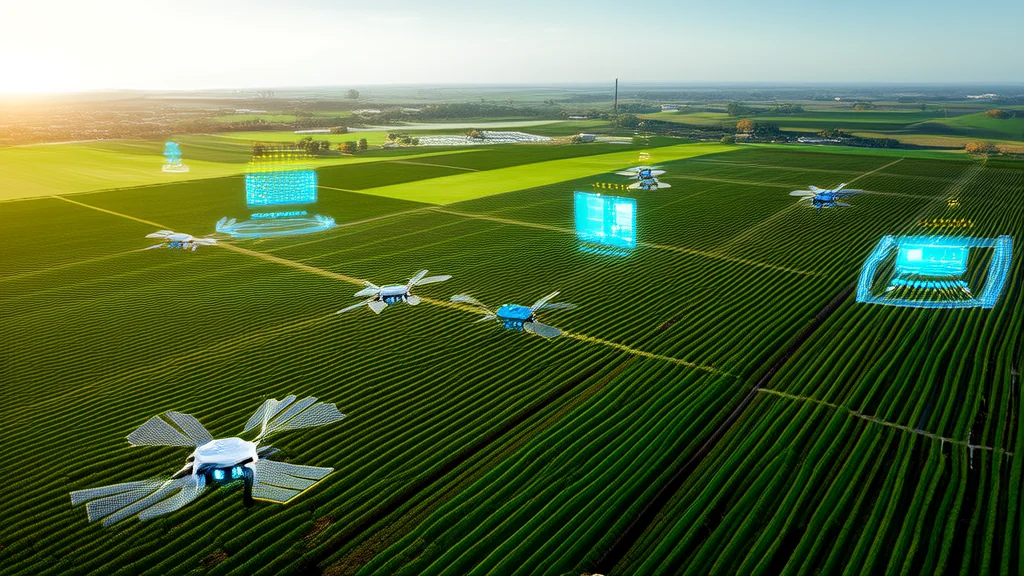
According to the United Nations, the world's population is projected to reach 9.7 billion by 2050, putting immense pressure on the agricultural sector to produce more food with fewer resources. This challenge is compounded by the need for sustainable practices that minimize environmental impact. Enter Artificial Intelligence (AI), a transformative technology that is revolutionizing precision agriculture and crop yield optimization. By leveraging AI, farmers and agribusinesses can achieve higher yields, reduce costs, and improve sustainability, making it a critical tool in the fight against global food insecurity.
Industry Context and Market Dynamics
The global precision agriculture market was valued at USD 6.8 billion in 2021 and is expected to grow at a CAGR of 12.5% from 2022 to 2030, reaching USD 16.5 billion by 2030. This growth is driven by the increasing adoption of advanced technologies, such as AI, IoT, and big data analytics, to optimize farming practices. The key pain points in the industry include inefficiencies in resource management, unpredictable weather patterns, and the need for sustainable farming methods. AI addresses these issues by providing real-time data analysis, predictive insights, and automated decision-making, enabling farmers to make informed choices and maximize their yields.
The competitive landscape in the AI-driven precision agriculture market includes both established tech giants and innovative startups. Companies like Microsoft, Google, and Amazon are investing heavily in AI solutions for agriculture, while startups such as FarmWise and CropX are developing specialized platforms and tools. These players are competing to offer the most effective and user-friendly solutions, driving innovation and adoption in the sector.
In-Depth Case Studies
Case Study 1: John Deere and Blue River Technology
John Deere, a leading manufacturer of agricultural equipment, acquired Blue River Technology in 2017 to integrate AI into its farming solutions. Blue River's See & Spray technology uses computer vision and machine learning to identify and target weeds, reducing the need for herbicides by up to 90%. This solution not only lowers operational costs but also promotes sustainable farming practices. In a pilot program, farmers using See & Spray reported a 25% reduction in herbicide usage, resulting in a 15% increase in crop yields. The implementation timeline was approximately 18 months, including integration with John Deere's existing machinery and training for farmers.
Case Study 2: Microsoft and Azure FarmBeats
Microsoft's Azure FarmBeats is an end-to-end AI and IoT platform designed to help farmers optimize their operations. The platform collects data from various sources, such as soil sensors, drones, and satellite imagery, and uses AI to provide actionable insights. For example, Azure FarmBeats can predict crop health, detect pest infestations, and recommend optimal irrigation schedules. In a case study with a large-scale farm in the Midwest, Azure FarmBeats helped reduce water usage by 30% and increased crop yields by 20%. The implementation involved a 12-month project, including the deployment of IoT sensors, integration with existing farm management systems, and training for farm staff.
Case Study 3: CropX and Precision Irrigation
CropX, a startup based in Israel, offers a precision irrigation solution that uses AI to optimize water usage. The company's system consists of wireless soil sensors and a cloud-based platform that analyzes data to provide real-time irrigation recommendations. In a partnership with a major almond grower in California, CropX's solution reduced water usage by 25% and increased crop yields by 15%. The implementation process took six months, involving the installation of sensors, integration with the farm's irrigation system, and training for the farm's staff. The measurable results included a 30% reduction in energy costs and a 20% decrease in labor hours spent on irrigation management.
Technical Implementation Insights
The key AI technologies used in precision agriculture include computer vision, machine learning, and deep learning algorithms. Computer vision is used to analyze images and videos from drones and satellites, enabling the detection of crop health, weed presence, and other important factors. Machine learning models, such as random forests and support vector machines, are employed to predict crop yields, pest infestations, and optimal resource allocation. Deep learning, particularly convolutional neural networks (CNNs), is used for image recognition and classification tasks, such as identifying specific plant diseases.
Implementation challenges often include data quality and availability, integration with existing systems, and the need for robust, reliable infrastructure. To address these challenges, companies like John Deere and Microsoft have developed comprehensive platforms that integrate multiple data sources and provide seamless connectivity. Performance metrics and benchmarks are crucial for evaluating the effectiveness of AI solutions. Key performance indicators (KPIs) include crop yield, resource efficiency, and cost savings. For example, John Deere's See & Spray technology has been benchmarked against traditional herbicide application methods, demonstrating a 25% reduction in herbicide usage and a 15% increase in crop yields.
Business Impact and ROI Analysis
The business benefits of AI in precision agriculture are substantial and quantifiable. For instance, John Deere's See & Spray technology has helped farmers reduce herbicide costs by up to 90%, resulting in a significant return on investment (ROI). Similarly, Microsoft's Azure FarmBeats has enabled a 30% reduction in water usage and a 20% increase in crop yields, leading to a positive ROI within the first year of implementation. The market adoption of AI-driven precision agriculture solutions is growing rapidly, driven by the clear financial and operational benefits. Companies that adopt these technologies gain a competitive advantage by improving their efficiency, reducing costs, and enhancing sustainability.
Return on investment (ROI) examples are plentiful. For example, a mid-sized farm in the Midwest that implemented Azure FarmBeats saw a 20% increase in crop yields and a 30% reduction in water usage, resulting in an ROI of over 150% within two years. Another example is a large-scale almond grower in California that used CropX's precision irrigation solution, achieving a 25% reduction in water usage and a 15% increase in crop yields, with an ROI of 120% within the first year.
Challenges and Limitations
Despite the numerous benefits, the implementation of AI in precision agriculture faces several challenges. One of the primary challenges is the high initial investment required for hardware, software, and training. Additionally, data privacy and security concerns can be a barrier, especially when dealing with sensitive information about crop health and farm operations. Technical limitations, such as the need for robust internet connectivity and the complexity of integrating AI with existing systems, can also pose significant hurdles. Regulatory and ethical considerations, such as the use of drones and the potential for job displacement, must also be addressed.
Industry-specific obstacles include the variability of weather conditions, which can affect the accuracy of AI predictions, and the need for continuous monitoring and maintenance of AI systems. For example, during a pilot program with Azure FarmBeats, a severe drought in the Midwest led to unexpected challenges in maintaining accurate irrigation recommendations. To overcome these challenges, companies are investing in more resilient and adaptive AI models, as well as providing ongoing support and training for farmers.
Future Outlook and Trends
The future of AI in precision agriculture is promising, with emerging trends and new applications on the horizon. One of the key trends is the integration of AI with other advanced technologies, such as robotics and autonomous vehicles, to create fully automated farming systems. For example, companies like FarmWise are developing autonomous weeding robots that use AI to identify and remove weeds without human intervention. Another trend is the use of AI for climate-smart agriculture, where AI models are used to predict and mitigate the effects of climate change on crop yields.
Predictions for the next 2-3 years include a significant increase in the adoption of AI-driven precision agriculture solutions, driven by the need for more efficient and sustainable farming practices. New applications, such as AI-powered vertical farming and indoor agriculture, are also expected to gain traction. Investment in the sector is expected to grow, with venture capital firms and large agribusinesses investing in AI startups and research. According to a report by MarketsandMarkets, the global AI in agriculture market is expected to grow from USD 1.5 billion in 2022 to USD 4.0 billion by 2027, at a CAGR of 21.5%.