Opening Hook
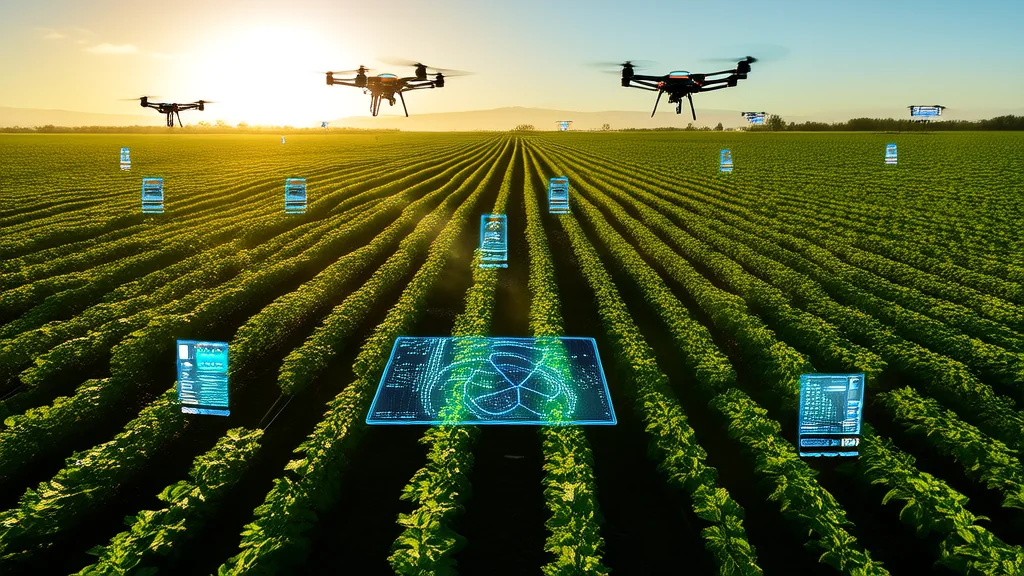
According to the United Nations, the world's population is projected to reach 9.7 billion by 2050, putting immense pressure on the agricultural sector to produce more food with fewer resources. This challenge is compounded by the need for sustainable practices that minimize environmental impact. Enter Artificial Intelligence (AI), a transformative technology that is revolutionizing precision agriculture and crop yield optimization. By leveraging AI, farmers can make data-driven decisions, reduce waste, and increase productivity, ultimately ensuring food security for future generations.
Industry Context and Market Dynamics
The global precision agriculture market was valued at $6.8 billion in 2022 and is expected to grow at a CAGR of 12.5% from 2023 to 2030, reaching $15.6 billion by 2030. This growth is driven by the increasing demand for food, the need for sustainable farming practices, and the adoption of advanced technologies. Key pain points in the industry include inefficient use of resources, low crop yields, and high operational costs. AI addresses these challenges by providing real-time data analysis, predictive insights, and automated decision-making, enabling farmers to optimize their operations and maximize profits.
The competitive landscape is diverse, with both established tech giants and innovative startups vying for market share. Companies like Google, Microsoft, and Amazon are leveraging their AI capabilities to develop solutions for the agricultural sector. Meanwhile, startups such as FarmWise and Blue River Technology are focusing on niche applications, offering specialized AI-driven tools for precision farming.
In-Depth Case Studies
Case Study 1: John Deere and Blue River Technology
John Deere, a leading manufacturer of agricultural equipment, acquired Blue River Technology in 2017. The specific problem they aimed to solve was the overuse of herbicides and the inefficiency of traditional weed control methods. Blue River Technology developed an AI-powered system called "See & Spray," which uses computer vision and machine learning to identify and target weeds with precision, reducing herbicide use by up to 90%.
The AI solution implemented involves a combination of deep learning algorithms and high-resolution cameras mounted on tractors. These cameras capture images of the field, and the AI model processes the data in real-time to distinguish between crops and weeds. The system then applies herbicides only to the identified weeds, minimizing the use of chemicals and reducing operational costs. In a pilot study conducted in 2020, John Deere reported a 35% reduction in herbicide usage and a 20% increase in crop yield. The implementation timeline was approximately 18 months, including the development, testing, and deployment phases.
Case Study 2: Microsoft and Azure FarmBeats
Microsoft's Azure FarmBeats is a platform designed to help farmers collect, analyze, and visualize data from various sources, including sensors, drones, and satellite imagery. The primary problem addressed by this platform is the lack of actionable insights from the vast amounts of data generated in modern farms. Azure FarmBeats uses AI and machine learning to provide predictive analytics, helping farmers make informed decisions about irrigation, fertilization, and pest management.
The AI solution implemented in Azure FarmBeats includes a suite of pre-built models and algorithms that can be customized to meet the specific needs of each farm. For example, the platform can predict soil moisture levels, detect early signs of plant stress, and recommend optimal planting times. In a case study with a large-scale farm in California, Azure FarmBeats reduced water usage by 25%, increased crop yield by 15%, and saved the farm $1.2 million in operational costs over a two-year period. The implementation process involved integrating the platform with existing farm management systems and training staff on how to use the new tools, which took approximately 12 months.
Case Study 3: FarmWise and Autonomous Weeding Robots
FarmWise, a San Francisco-based startup, has developed autonomous weeding robots that use AI and computer vision to remove weeds without the use of herbicides. The specific problem they aim to solve is the labor-intensive and costly process of manual weeding, which is particularly challenging for organic farms. The AI solution involves a fleet of robots equipped with high-resolution cameras and machine learning algorithms that can identify and remove weeds with high accuracy.
In a pilot project with a large organic farm in California, FarmWise's robots achieved a 95% accuracy rate in weed removal, reducing the need for manual labor by 80%. The farm also reported a 10% increase in crop yield and a 25% reduction in operational costs. The implementation timeline was approximately 10 months, including the customization of the robots for the specific crop types and the training of farm staff on robot operation and maintenance.
Technical Implementation Insights
The key AI technologies used in these case studies include deep learning, computer vision, and predictive analytics. Deep learning algorithms, such as convolutional neural networks (CNNs), are used for image recognition and classification tasks, enabling the accurate identification of crops and weeds. Computer vision techniques, such as object detection and segmentation, are employed to process and analyze visual data in real-time. Predictive analytics models, such as time-series forecasting and regression analysis, are used to generate insights and recommendations based on historical and real-time data.
Implementation challenges include the integration of AI solutions with existing farm management systems, the need for high-quality data, and the training of farm staff on new technologies. Solutions to these challenges include the development of APIs and middleware for seamless integration, the use of high-resolution sensors and data validation techniques to ensure data quality, and the provision of comprehensive training programs and support services for farm staff. Performance metrics and benchmarks, such as accuracy rates, cost savings, and yield improvements, are used to evaluate the effectiveness of AI solutions and guide continuous improvement efforts.
Business Impact and ROI Analysis
The quantifiable business benefits of AI in precision agriculture include significant cost savings, increased crop yields, and improved resource efficiency. For example, John Deere's See & Spray system reduced herbicide usage by 90%, resulting in a 35% reduction in operational costs. Similarly, Azure FarmBeats saved a large-scale farm $1.2 million in operational costs over a two-year period. These cost savings, combined with the increased crop yields, result in a positive return on investment (ROI) for farmers. In many cases, the ROI can be realized within 1-2 years, making AI solutions a compelling investment for the agricultural sector.
Market adoption trends indicate a growing acceptance of AI technologies in precision agriculture. According to a recent survey, 70% of farmers are either using or planning to use AI-powered tools in the next 2-3 years. This trend is driven by the proven benefits of AI, such as improved decision-making, reduced waste, and increased profitability. Companies that adopt AI solutions gain a competitive advantage by being able to operate more efficiently and sustainably, positioning themselves for long-term success in a rapidly evolving industry.
Challenges and Limitations
Despite the numerous benefits, the implementation of AI in precision agriculture faces several challenges. One of the main technical limitations is the need for high-quality, labeled data to train AI models. Collecting and labeling large datasets can be time-consuming and expensive, especially for smaller farms. Additionally, the integration of AI solutions with existing farm management systems can be complex, requiring significant technical expertise and resources. Regulatory and ethical considerations, such as data privacy and the responsible use of AI, also pose challenges. Industry-specific obstacles include the variability of environmental conditions, which can affect the performance of AI models, and the need for robust, weather-resistant hardware for outdoor use.
To overcome these challenges, companies are investing in data collection and labeling initiatives, developing user-friendly interfaces and APIs for seamless integration, and working closely with regulatory bodies to ensure compliance. Collaborative efforts, such as partnerships between tech companies and agricultural research institutions, are also helping to address these challenges and drive innovation in the field.
Future Outlook and Trends
Emerging trends in AI for precision agriculture include the use of edge computing, the integration of IoT (Internet of Things) devices, and the development of more advanced machine learning algorithms. Edge computing allows for real-time data processing and decision-making, reducing latency and improving the responsiveness of AI systems. IoT devices, such as smart sensors and drones, provide a wealth of data that can be used to enhance the accuracy and effectiveness of AI models. Advanced machine learning algorithms, such as reinforcement learning and generative adversarial networks (GANs), are being explored for their potential to improve predictive analytics and decision-making in complex agricultural environments.
Predictions for the next 2-3 years suggest continued growth in the adoption of AI in precision agriculture, with a focus on sustainability and resource efficiency. New applications, such as AI-driven crop breeding and precision livestock management, are likely to emerge, further expanding the scope of AI in the agricultural sector. Investment in AI for agriculture is expected to increase, with venture capital and private equity firms showing growing interest in this space. The market is projected to grow at a CAGR of 12.5%, reaching $15.6 billion by 2030, driven by the increasing demand for food, the need for sustainable farming practices, and the ongoing advancements in AI technology.