Introduction and Context
Generative Adversarial Networks (GANs) are a class of machine learning frameworks introduced by Ian Goodfellow and his colleagues in 2014. GANs consist of two neural networks, the generator and the discriminator, which are trained simultaneously through an adversarial process. The generator creates data that is indistinguishable from real data, while the discriminator evaluates the authenticity of the generated data. This technology has revolutionized the field of generative models, enabling the creation of highly realistic synthetic data across various domains, including images, text, and audio.
The importance of GANs lies in their ability to generate high-quality, diverse, and realistic data, which has numerous applications in fields such as computer vision, natural language processing, and drug discovery. Historically, GANs have addressed the challenge of generating complex, high-dimensional data, which was previously difficult to achieve with traditional generative models like Variational Autoencoders (VAEs). Key milestones in the development of GANs include the introduction of the original GAN framework in 2014, followed by significant advancements in training stability and quality, such as the Wasserstein GAN (WGAN) in 2017 and the StyleGAN series in 2018 and 2019.
Core Concepts and Fundamentals
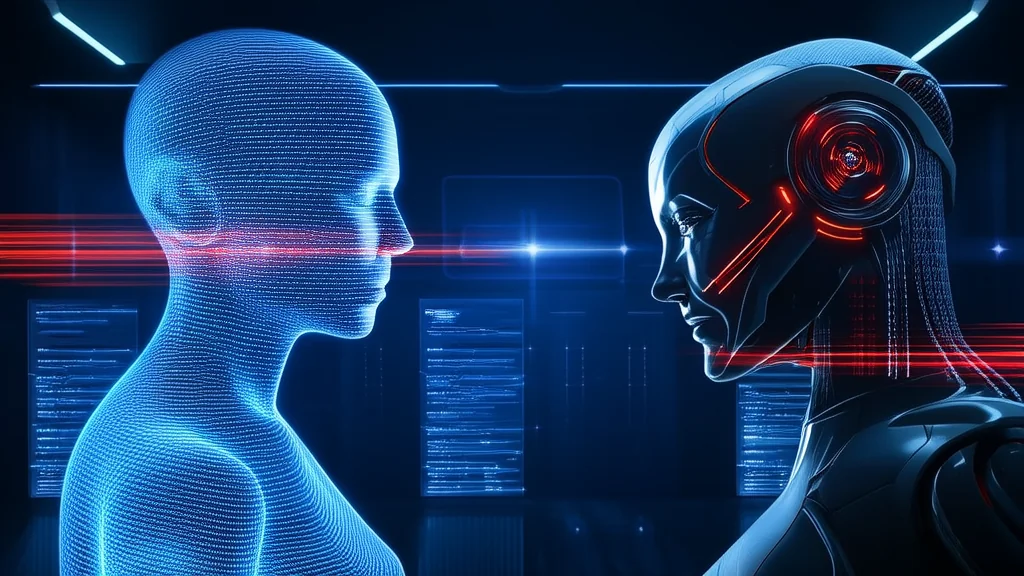
At the heart of GANs is the concept of a zero-sum game between the generator and the discriminator. The generator aims to create data that is indistinguishable from real data, while the discriminator aims to correctly classify real and fake data. This adversarial process drives both networks to improve over time. The generator learns to produce more realistic data, and the discriminator becomes better at distinguishing real from fake data.
Mathematically, the goal of the generator is to maximize the probability that the discriminator will make a mistake, while the discriminator aims to minimize this probability. This can be formulated as a minimax game, where the generator tries to minimize the loss function, and the discriminator tries to maximize it. The loss function typically involves a binary cross-entropy term, which measures the difference between the predicted and actual labels.
The core components of a GAN are the generator and the discriminator. The generator takes random noise as input and produces synthetic data, while the discriminator takes both real and generated data as input and outputs a probability that the data is real. The generator and discriminator are typically deep neural networks, with the generator often using techniques like deconvolutional layers to upsample the noise into a higher-dimensional space, and the discriminator using convolutional layers to downsample and classify the data.
Compared to related technologies like VAEs, GANs do not require an explicit likelihood function, which makes them more flexible and capable of generating higher-quality data. However, GANs can be more challenging to train due to issues like mode collapse and vanishing gradients. To illustrate, consider a simple analogy: the generator is like a forger trying to create counterfeit money, and the discriminator is like a detective trying to catch the forger. As the forger gets better, the detective must also improve to keep up, and vice versa.
Technical Architecture and Mechanics
The architecture of a GAN consists of two main components: the generator and the discriminator. The generator, \(G\), takes a random noise vector \(z\) as input and produces a synthetic sample \(G(z)\). The discriminator, \(D\), takes both real data \(x\) and generated data \(G(z)\) as input and outputs a probability \(D(x)\) or \(D(G(z))\) that the input is real. The overall objective is to train the generator to produce data that the discriminator cannot distinguish from real data.
The training process involves alternating updates to the generator and the discriminator. Initially, the generator produces low-quality, easily distinguishable data. The discriminator quickly learns to identify these as fake. As training progresses, the generator improves, and the discriminator must become more sophisticated to differentiate real from fake data. This iterative process continues until the generator produces data that is indistinguishable from real data.
Key design decisions in GANs include the choice of loss functions, network architectures, and training strategies. For instance, the original GAN used a binary cross-entropy loss, but subsequent variants like WGAN use the Earth Mover's distance (Wasserstein-1 metric) to improve training stability. In WGAN, the discriminator is called a critic, and it outputs a scalar score rather than a probability. This change helps to mitigate issues like vanishing gradients and mode collapse.
Another important aspect is the use of different regularization techniques to stabilize training. For example, spectral normalization, which normalizes the weights of the discriminator, has been shown to improve the stability and performance of GANs. Additionally, techniques like gradient penalty and feature matching have been proposed to further enhance the training process.
For instance, in the StyleGAN architecture, the generator uses a style-based approach to control the generation of images. It separates the style and structure of the image, allowing for more fine-grained control over the generated output. This is achieved through a mapping network that transforms the input noise into a style vector, which is then applied at multiple levels of the generator. This approach results in more diverse and high-quality images compared to earlier GAN architectures.
Advanced Techniques and Variations
Since the introduction of GANs, numerous variations and improvements have been developed to address the challenges of training and to enhance the quality and diversity of generated data. One of the most significant advancements is the Wasserstein GAN (WGAN), which uses the Wasserstein-1 metric to measure the distance between the real and generated data distributions. This change leads to more stable training and better convergence properties.
Another notable variant is the Progressive Growing of GANs (ProGAN), which trains the generator and discriminator progressively, starting with low-resolution images and gradually increasing the resolution. This approach helps to avoid mode collapse and improves the quality of the generated images. ProGAN has been particularly successful in generating high-resolution, realistic images.
The StyleGAN series, introduced by NVIDIA, represents a significant leap in GAN technology. StyleGAN and its successor, StyleGAN2, use a style-based generator that allows for more control over the generated images. The generator is designed to separate the style and structure of the image, enabling the manipulation of specific features like facial attributes. This has led to the creation of highly realistic and diverse images, making StyleGAN a state-of-the-art model for image synthesis.
Recent research has also explored conditional GANs, which allow for the generation of data conditioned on specific attributes or labels. For example, Conditional GANs (cGANs) can generate images based on class labels, text descriptions, or other conditions. This has expanded the applicability of GANs to tasks like image-to-image translation, where the goal is to transform one type of image into another, such as converting a sketch into a photo-realistic image.
Practical Applications and Use Cases
GANs have found a wide range of practical applications across various domains. In computer vision, GANs are used for image synthesis, super-resolution, and image-to-image translation. For example, NVIDIA's StyleGAN2 is used to generate highly realistic human faces, which can be used in applications like virtual avatars, video games, and digital art. Another application is in medical imaging, where GANs can generate synthetic medical images for training and testing purposes, helping to overcome the limitations of small datasets.
In natural language processing, GANs have been used for text generation and style transfer. For instance, TextGANs can generate coherent and contextually relevant text, which can be used for tasks like chatbot responses, content generation, and language translation. GANs have also been applied to audio synthesis, where they can generate realistic speech and music. Google's Tacotron 2, for example, uses a GAN-based approach to generate high-quality, natural-sounding speech from text.
What makes GANs suitable for these applications is their ability to learn and generate complex, high-dimensional data. They can capture intricate patterns and dependencies in the data, leading to more realistic and diverse outputs. However, the performance of GANs can vary depending on the specific task and the quality of the training data. For instance, in image synthesis, GANs can produce highly detailed and photorealistic images, but they may struggle with rare or underrepresented classes in the dataset.
Technical Challenges and Limitations
Despite their success, GANs face several technical challenges and limitations. One of the primary challenges is training instability, which can lead to issues like mode collapse, where the generator produces only a limited set of outputs, and vanishing gradients, where the discriminator becomes too good, preventing the generator from improving. These issues can make it difficult to train GANs reliably and efficiently.
Another challenge is the computational requirements of GANs. Training GANs, especially large-scale models like StyleGAN2, requires significant computational resources, including powerful GPUs and large amounts of memory. This can be a barrier to entry for researchers and practitioners with limited access to high-performance computing infrastructure.
Scalability is also a concern, as GANs can struggle with very high-dimensional data and large datasets. While techniques like progressive growing and spectral normalization have helped to address some of these issues, there is still room for improvement. Additionally, evaluating the quality and diversity of generated data remains a challenge, as existing metrics like the Fréchet Inception Distance (FID) and Inception Score (IS) have limitations and may not fully capture the nuances of the generated data.
Research directions addressing these challenges include the development of new loss functions, regularization techniques, and training strategies. For example, recent work has explored the use of self-supervised learning and contrastive learning to improve the stability and quality of GANs. Additionally, efforts to reduce the computational requirements and improve the scalability of GANs are ongoing, with the goal of making them more accessible and practical for a wider range of applications.
Future Developments and Research Directions
Emerging trends in GAN research include the development of more efficient and scalable training methods, as well as the exploration of new applications and domains. One active research direction is the integration of GANs with other machine learning paradigms, such as reinforcement learning and meta-learning, to create more versatile and adaptive models. For example, GANs can be used to generate synthetic environments for training reinforcement learning agents, or to adapt to new tasks and domains without extensive retraining.
Another area of interest is the development of GANs for multimodal data, where the goal is to generate and manipulate data across multiple modalities, such as images, text, and audio. This could lead to more powerful and flexible generative models that can handle a wide range of data types and tasks. For instance, multimodal GANs could be used to generate coherent and contextually relevant multimedia content, such as videos with synchronized audio and text.
Potential breakthroughs on the horizon include the development of GANs that can generate even more realistic and diverse data, as well as the creation of more interpretable and controllable models. For example, recent work on disentangled representations and latent space manipulation has shown promise in creating GANs that can generate data with specific attributes and styles. Additionally, the integration of GANs with other AI technologies, such as transformers and graph neural networks, could lead to new and innovative applications.
From an industry perspective, the adoption of GANs is expected to grow as the technology becomes more mature and accessible. Companies are increasingly using GANs for tasks like content generation, data augmentation, and creative applications. Academic research continues to push the boundaries of what GANs can achieve, with a focus on addressing the remaining challenges and exploring new frontiers in generative modeling.