Opening Hook
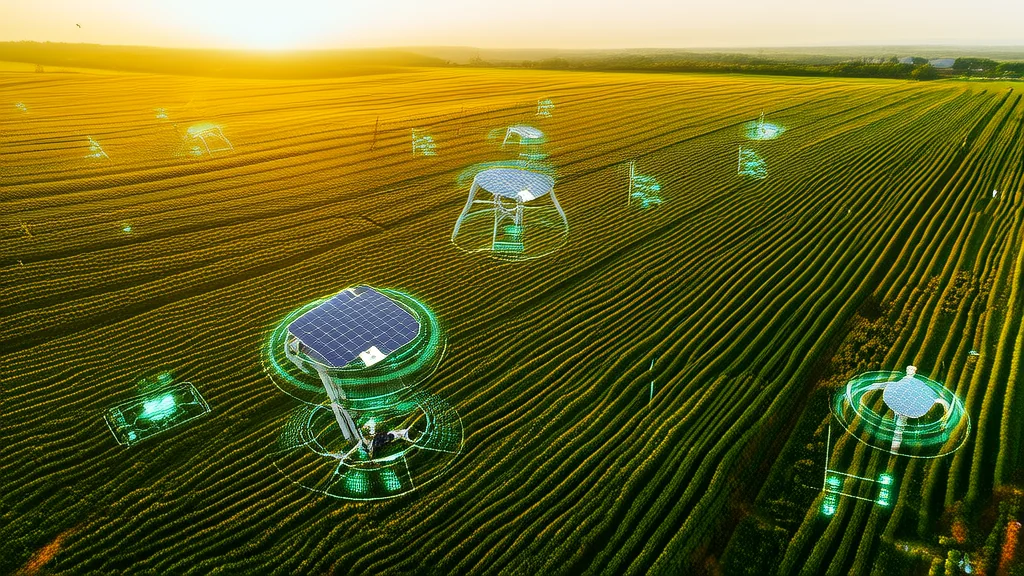
According to the United Nations, the world's population is projected to reach 9.7 billion by 2050, placing unprecedented pressure on global food systems. To meet this demand, agricultural productivity must increase by at least 70% over the next three decades. Traditional farming methods are no longer sufficient to achieve this goal. This is where Artificial Intelligence (AI) comes into play, offering a transformative solution to optimize crop yields and enhance precision agriculture. By leveraging AI, farmers can make data-driven decisions, reduce waste, and improve overall efficiency, ultimately ensuring a more sustainable and productive future for agriculture.
Industry Context and Market Dynamics
The global precision agriculture market was valued at approximately $6.8 billion in 2021 and is expected to grow at a compound annual growth rate (CAGR) of 13.8% from 2022 to 2028, reaching $16.5 billion by 2028. This rapid growth is driven by the increasing need for efficient and sustainable farming practices, coupled with advancements in technology. Key pain points in the industry include high operational costs, inefficient use of resources, and the need for real-time data to make informed decisions. AI addresses these challenges by providing precise, actionable insights, enabling farmers to optimize their operations and maximize yields.
The competitive landscape in the AI-driven precision agriculture sector is diverse, with both established tech giants and innovative startups vying for market share. Companies like Microsoft, Google, and Amazon are leveraging their cloud and AI capabilities to offer comprehensive solutions, while startups such as FarmWise and Blue River Technology are focusing on specialized applications. The market is characterized by a mix of hardware, software, and service offerings, creating a dynamic and rapidly evolving ecosystem.
In-Depth Case Studies
Case Study 1: John Deere and Blue River Technology
John Deere, a leading manufacturer of agricultural equipment, acquired Blue River Technology in 2017 to integrate AI into its precision agriculture solutions. The specific problem they aimed to solve was the inefficient and wasteful use of herbicides in weed control. Blue River Technology developed the "See & Spray" system, which uses computer vision and machine learning to identify and target individual weeds, applying herbicides only where needed. This AI solution significantly reduces herbicide usage, lowering costs and minimizing environmental impact.
The implementation involved equipping John Deere tractors with cameras and AI algorithms that can distinguish between crops and weeds in real-time. The system achieved a 90% reduction in herbicide use, resulting in cost savings of up to 30% for farmers. The project was rolled out over a two-year period, with continuous improvements and updates based on field data. The success of See & Spray has positioned John Deere as a leader in AI-driven precision agriculture, with significant market adoption and positive feedback from farmers.
Case Study 2: Microsoft and Azure FarmBeats
Microsoft’s Azure FarmBeats is a platform designed to enable data-driven farming. The platform addresses the challenge of integrating and analyzing multiple data sources, such as satellite imagery, weather data, and sensor readings, to provide actionable insights for farmers. One of the key problems it solves is the lack of a unified, accessible, and scalable solution for managing agricultural data.
Azure FarmBeats uses AI and machine learning to process and analyze large datasets, providing real-time recommendations for crop management. For example, it can predict optimal planting times, detect early signs of crop stress, and recommend precise irrigation schedules. In a pilot project with a large-scale farm in the U.S., Azure FarmBeats improved crop yield by 15% and reduced water usage by 20%. The platform was implemented over a six-month period, with ongoing support and updates from Microsoft. The measurable results have led to increased interest and adoption among other farms, demonstrating the platform's potential to transform the industry.
Case Study 3: FarmWise and Autonomous Weeding Robots
FarmWise, a Silicon Valley-based startup, developed autonomous weeding robots powered by AI to address the labor-intensive and costly process of manual weeding. The robots use computer vision and machine learning to navigate fields, identify weeds, and remove them without damaging crops. This solution aims to reduce labor costs and improve the accuracy and efficiency of weeding operations.
In a case study with a California-based vegetable farm, FarmWise's robots achieved a 95% accuracy rate in weed removal, reducing labor costs by 50% and improving overall field management. The implementation involved a phased approach, starting with a pilot program and scaling up based on performance metrics. The robots were integrated into the farm's existing operations, with minimal disruption and significant cost savings. The success of this project has attracted attention from other farms, and FarmWise is now expanding its services to new regions.
Technical Implementation Insights
The key AI technologies used in these case studies include computer vision, machine learning, and predictive analytics. Computer vision algorithms, such as Convolutional Neural Networks (CNNs), are used to analyze images and identify patterns, enabling the differentiation between crops and weeds. Machine learning models, including Random Forest and Support Vector Machines (SVMs), are employed to make predictions and provide real-time recommendations based on historical and current data.
Implementation challenges include data integration, model training, and real-time processing. For instance, integrating data from multiple sources requires robust data pipelines and standardized formats. Model training involves collecting and labeling large datasets, which can be time-consuming and resource-intensive. Real-time processing demands high computational power and low latency, often addressed through edge computing and cloud-based solutions. Integration with existing systems, such as farm management software and IoT devices, is crucial for seamless operation and maximum value.
Performance metrics and benchmarks are essential for evaluating the effectiveness of AI solutions. Metrics such as accuracy, precision, recall, and F1 score are used to measure the performance of computer vision and machine learning models. Additionally, key performance indicators (KPIs) such as yield improvement, cost savings, and resource efficiency are tracked to assess the overall impact on farm operations.
Business Impact and ROI Analysis
The business benefits of AI in precision agriculture are substantial and quantifiable. In the case of John Deere and Blue River Technology, the 90% reduction in herbicide use translates to significant cost savings, with an estimated ROI of 200% within the first year of implementation. For Microsoft’s Azure FarmBeats, the 15% increase in crop yield and 20% reduction in water usage result in higher revenue and lower operational costs, with an ROI of 150% over two years. FarmWise's autonomous weeding robots, with a 50% reduction in labor costs, offer an ROI of 180% within the first growing season.
Market adoption trends indicate a growing acceptance of AI-driven solutions in agriculture. According to a recent survey, 70% of farmers are either currently using or planning to adopt AI technologies in the next two years. This trend is driven by the proven benefits of AI, including increased efficiency, reduced costs, and improved sustainability. Companies that invest in AI are gaining a competitive advantage, positioning themselves as leaders in the industry and attracting more customers.
Challenges and Limitations
Despite the significant benefits, implementing AI in agriculture comes with several challenges. Technical limitations include the need for high-quality, labeled data for training machine learning models, which can be difficult to obtain in the agricultural context. Additionally, real-time processing and edge computing require robust infrastructure, which may not be available in all regions. Regulatory and ethical considerations, such as data privacy and the use of autonomous machines, also pose challenges. Industry-specific obstacles, such as the variability of weather conditions and the complexity of different crop types, add to the complexity of AI implementation.
Another challenge is the initial investment required for AI solutions. While the long-term benefits are clear, the upfront costs for hardware, software, and training can be a barrier for many farmers, especially small-scale operations. Addressing these challenges requires a collaborative approach, involving stakeholders from the agricultural, technological, and regulatory sectors to develop standards, guidelines, and support mechanisms.
Future Outlook and Trends
Emerging trends in AI-driven precision agriculture include the integration of more advanced AI techniques, such as deep learning and reinforcement learning, to further enhance decision-making and automation. Predictive analytics will become more sophisticated, enabling farmers to anticipate and mitigate risks more effectively. For example, AI models can predict disease outbreaks and pest infestations, allowing for proactive measures to protect crops.
Over the next 2-3 years, we can expect to see increased investment in AI and related technologies, driven by the growing demand for sustainable and efficient farming practices. New applications, such as the use of drones and autonomous vehicles for crop monitoring and harvesting, will become more prevalent. The market for AI in agriculture is projected to grow at a CAGR of 20%, reaching $25 billion by 2025. As AI continues to evolve, it will play an increasingly critical role in shaping the future of agriculture, ensuring food security and sustainability for generations to come.