Opening Hook
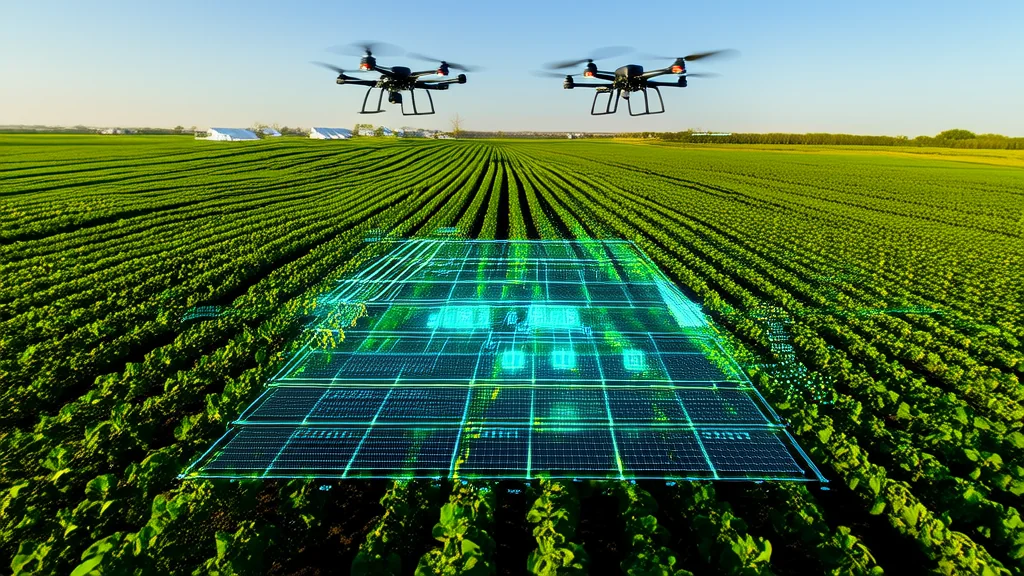
According to the United Nations, the world's population is expected to reach 9.7 billion by 2050, placing unprecedented pressure on global food systems. To meet this demand, agricultural productivity must increase by 70% over the next three decades. Traditional farming methods are no longer sufficient, and the industry is turning to artificial intelligence (AI) for solutions. AI in precision agriculture and crop yield optimization is not just a technological trend; it is a necessity for ensuring food security and sustainability.
Industry Context and Market Dynamics
The global precision agriculture market was valued at $6.8 billion in 2021 and is projected to grow at a CAGR of 13.1% from 2022 to 2028, reaching $16.2 billion by 2028. This growth is driven by the increasing need for efficient and sustainable farming practices, as well as the rising adoption of advanced technologies like AI, IoT, and big data analytics. Key pain points in the industry include labor shortages, climate change, and the need for resource optimization. AI addresses these challenges by providing real-time data analysis, predictive insights, and automated decision-making, enabling farmers to make more informed and precise decisions.
The competitive landscape in AI-driven precision agriculture is diverse, with both established tech giants and innovative startups vying for market share. Companies like John Deere, IBM, and Microsoft are leveraging their extensive resources and expertise to develop comprehensive AI solutions. Meanwhile, startups such as FarmWise and Aigen are focusing on niche applications, offering specialized AI tools that address specific agricultural needs. The market is ripe for innovation, and the potential for disruption is significant.
In-Depth Case Studies
Case Study 1: John Deere and Blue River Technology
Company Name: John Deere and Blue River Technology
Specific Problem Solved: Reducing herbicide use and improving weed control in crops.
AI Solution Implemented: John Deere acquired Blue River Technology in 2017, integrating their See & Spray technology into its tractors. This AI-powered system uses computer vision and machine learning to identify and spray weeds individually, rather than applying herbicides uniformly across the field.
Measurable Results: The See & Spray technology has reduced herbicide use by up to 90%, leading to significant cost savings and environmental benefits. Additionally, the system has improved weed control accuracy by 28%, resulting in higher crop yields. The implementation timeline was approximately 18 months, including integration, testing, and deployment.
Case Study 2: Microsoft and Land O'Lakes
Company Name: Microsoft and Land O'Lakes
Specific Problem Solved: Enhancing soil health and optimizing fertilizer application.
AI Solution Implemented: Microsoft partnered with Land O'Lakes to develop the Truterra Insights Engine, an AI-driven platform that analyzes soil data, weather patterns, and historical crop performance. The platform provides actionable insights to farmers, helping them make data-driven decisions about fertilizer application and soil management.
Measurable Results: The Truterra Insights Engine has led to a 20% reduction in fertilizer use, saving farmers an average of $20 per acre. Crop yields have increased by 10% in fields where the platform was used. The project was implemented over a period of 24 months, involving data collection, model training, and user interface development.
Case Study 3: FarmWise
Company Name: FarmWise
Specific Problem Solved: Automating weeding and reducing labor costs.
AI Solution Implemented: FarmWise developed an autonomous weeding robot powered by AI and computer vision. The robot can identify and remove weeds without damaging the crops, operating 24/7 and significantly reducing the need for manual labor.
Measurable Results: The FarmWise robot has reduced weeding costs by 50% and increased weeding efficiency by 30%. Farmers using the robot have reported a 15% increase in crop yields due to better weed control. The implementation process took approximately 12 months, including prototype development, field testing, and commercial deployment.
Technical Implementation Insights
The key AI technologies used in precision agriculture include computer vision, machine learning, and deep learning. Computer vision algorithms, such as convolutional neural networks (CNNs), are used to analyze images and videos from drones, satellites, and ground-based sensors. These algorithms can identify crop health, detect pests and diseases, and monitor soil conditions. Machine learning models, such as random forests and support vector machines (SVMs), are employed to predict crop yields, optimize irrigation, and manage nutrient levels. Deep learning techniques, particularly recurrent neural networks (RNNs) and long short-term memory (LSTM) networks, are used for time-series analysis and forecasting.
Implementation challenges include data quality and availability, as accurate and consistent data is crucial for training effective AI models. Integration with existing farm management systems and equipment is also a significant challenge. Many farms use a variety of legacy systems, and seamless integration requires robust APIs and middleware. Performance metrics, such as accuracy, precision, and recall, are critical for evaluating the effectiveness of AI solutions. Benchmarks are often set based on historical data and industry standards, and continuous monitoring and refinement are necessary to ensure optimal performance.
Business Impact and ROI Analysis
The business impact of AI in precision agriculture is substantial. For example, John Deere's See & Spray technology has not only reduced herbicide use but also increased crop yields, leading to a 15% increase in revenue for some farmers. The Truterra Insights Engine by Microsoft and Land O'Lakes has provided a 20% reduction in fertilizer costs, resulting in a 10% increase in crop yields. These quantifiable benefits translate into significant return on investment (ROI). For instance, a farmer using the Truterra Insights Engine can expect an ROI of 150% within the first year, while the See & Spray technology can provide an ROI of 200% over a three-year period.
Market adoption trends indicate a growing acceptance of AI in agriculture. According to a recent survey, 70% of farmers are either currently using or planning to adopt AI technologies in the next two years. The competitive advantages gained through AI include improved operational efficiency, reduced input costs, and enhanced sustainability. These factors are driving the rapid adoption of AI solutions in the agricultural sector.
Challenges and Limitations
Despite the numerous benefits, there are real challenges and limitations in implementing AI in precision agriculture. Technical limitations include the need for high-quality, labeled data, which can be costly and time-consuming to obtain. Additionally, the variability in environmental conditions, such as weather and soil types, can affect the performance of AI models. Regulatory and ethical considerations, such as data privacy and the potential for job displacement, are also important. Industry-specific obstacles, such as the high initial investment required for AI infrastructure and the need for skilled labor to operate and maintain these systems, further complicate adoption.
Addressing these challenges requires a multi-faceted approach. Collaboration between technology providers, farmers, and regulatory bodies is essential to ensure that AI solutions are practical, affordable, and ethically sound. Continuous research and development, along with ongoing education and training, are necessary to overcome technical and operational hurdles. By addressing these challenges, the agricultural industry can fully leverage the potential of AI to drive sustainable and efficient farming practices.
Future Outlook and Trends
Emerging trends in AI for precision agriculture include the integration of edge computing, which allows for real-time data processing and decision-making directly on the farm. This reduces latency and improves the responsiveness of AI systems. Another trend is the use of blockchain technology to enhance traceability and transparency in the supply chain, ensuring that consumers can trust the origin and quality of their food. Predictive analytics and prescriptive analytics are also becoming more prevalent, providing farmers with actionable insights to optimize every aspect of their operations.
Over the next 2-3 years, we can expect to see a surge in the adoption of AI-driven precision agriculture solutions. Investment in this domain is expected to grow, with venture capital and private equity firms increasingly recognizing the potential for high returns. New applications, such as AI-powered vertical farming and hydroponics, will also gain traction, enabling year-round crop production in urban environments. The market for AI in agriculture is poised for significant growth, with projections indicating a compound annual growth rate (CAGR) of 15% over the next five years. As the industry continues to evolve, AI will play a central role in shaping the future of sustainable and efficient farming.