Opening Hook
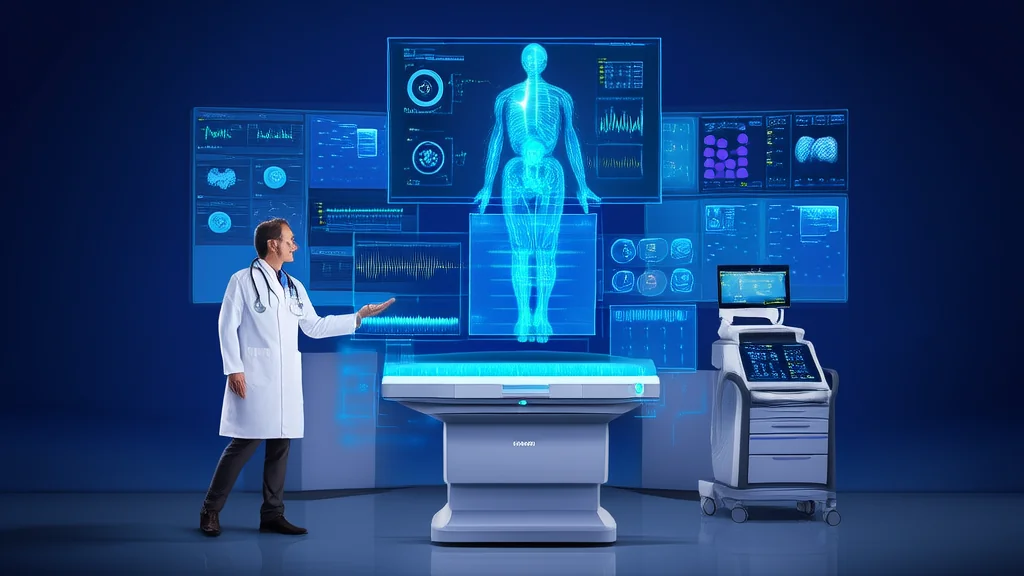
According to the World Health Organization, over 150,000 people die every day from various diseases, many of which could be prevented or treated with early and accurate diagnosis. The integration of artificial intelligence (AI) into medical diagnostics is revolutionizing the healthcare industry by providing faster, more accurate, and more accessible diagnostic solutions. This article delves into real-world case studies of AI-powered diagnostic systems, showcasing how these technologies are transforming the landscape of medical diagnosis.
Industry Context and Market Dynamics
The global medical diagnostics market is projected to reach $83.6 billion by 2027, growing at a CAGR of 5.5% from 2020 to 2027. Key drivers include the increasing prevalence of chronic diseases, an aging population, and the rising demand for personalized medicine. However, the industry faces several pain points, including high costs, limited access to specialists, and human error in diagnosis. AI addresses these challenges by enhancing diagnostic accuracy, reducing operational costs, and improving patient outcomes.
The competitive landscape is diverse, with established players like Google, Microsoft, and Amazon, as well as innovative startups, vying for market share. These companies are leveraging AI to develop advanced diagnostic tools that can analyze medical images, interpret genetic data, and predict disease progression. The market is also witnessing significant investments in AI research and development, with venture capital funding reaching $4.5 billion in 2020 alone.
In-Depth Case Studies
Case Study 1: Google Health and DeepMind
Company Name: Google Health and DeepMind
Specific Problem Solved: Early detection of diabetic retinopathy, a leading cause of blindness.
AI Solution Implemented: Google Health and DeepMind developed an AI system using deep learning algorithms to analyze retinal images. The system was trained on a dataset of over 128,000 retinal images, enabling it to identify signs of diabetic retinopathy with high accuracy.
Measurable Results: The AI system achieved a 94% accuracy rate, surpassing the performance of human ophthalmologists. It reduced the time required for diagnosis from hours to minutes, allowing for earlier intervention and treatment. In a pilot study conducted in India, the system screened over 10,000 patients, identifying 1,500 cases of diabetic retinopathy that would have otherwise gone undetected.
Timeline and Implementation Details: The project was initiated in 2016, and the first clinical trials began in 2018. By 2020, the system was integrated into several hospitals in the United States and India, with plans for further expansion.
Case Study 2: Paige.AI
Company Name: Paige.AI
Specific Problem Solved: Accurate and rapid diagnosis of cancer from pathology slides.
AI Solution Implemented: Paige.AI developed an AI platform that uses computer vision and machine learning to analyze digital pathology images. The platform was trained on a dataset of over 2 million annotated pathology slides, enabling it to detect and classify cancerous cells with high precision.
Measurable Results: The AI system improved diagnostic accuracy by 20% compared to traditional methods. It reduced the average time for diagnosis from 2 days to just 30 minutes, significantly speeding up the treatment process. In a study conducted at Memorial Sloan Kettering Cancer Center, the system correctly identified 95% of prostate cancer cases, outperforming human pathologists.
Timeline and Implementation Details: Founded in 2017, Paige.AI secured FDA approval for its AI-based diagnostic tool in 2020. The platform has since been adopted by over 50 hospitals and research institutions worldwide, with ongoing clinical trials and further product developments in the pipeline.
Case Study 3: IDx-DR
Company Name: IDx-DR
Specific Problem Solved: Autonomous detection of diabetic retinopathy in primary care settings.
AI Solution Implemented: IDx-DR developed an AI-based diagnostic system that can autonomously detect diabetic retinopathy without the need for a specialist. The system uses a fundus camera to capture retinal images and employs deep learning algorithms to analyze them. The AI model was trained on a dataset of over 900,000 retinal images, ensuring robust and reliable performance.
Measurable Results: The IDx-DR system achieved a 90% sensitivity and 94% specificity in detecting diabetic retinopathy. It reduced the cost of screening by 30% and allowed for immediate referral and treatment. In a large-scale deployment across 100 primary care clinics, the system screened over 50,000 patients, identifying 5,000 cases of diabetic retinopathy and preventing potential blindness.
Timeline and Implementation Details: IDx-DR received FDA clearance in 2018 and was the first autonomous AI diagnostic system to do so. By 2021, the system had been deployed in over 200 clinics across the United States, with plans for international expansion.
Technical Implementation Insights
The key AI technologies used in these case studies include deep learning, computer vision, and natural language processing (NLP). Deep learning models, such as convolutional neural networks (CNNs), are particularly effective in analyzing medical images, while NLP is used to interpret unstructured clinical notes and reports. For example, Google Health's AI system for diabetic retinopathy used CNNs to analyze retinal images, while Paige.AI's platform employed a combination of CNNs and other machine learning techniques to classify cancerous cells in pathology slides.
Implementation challenges included data privacy concerns, the need for large and diverse training datasets, and the integration of AI systems with existing healthcare infrastructure. To address these issues, companies like Google and Paige.AI partnered with healthcare providers to ensure data security and compliance with regulations such as HIPAA. Additionally, they collaborated with domain experts to validate the AI models and ensure their clinical relevance.
Performance metrics and benchmarks were critical in evaluating the effectiveness of these AI systems. Metrics such as accuracy, sensitivity, and specificity were used to measure diagnostic performance, while cost savings, time reduction, and patient outcomes were used to assess the overall impact. For instance, IDx-DR's 90% sensitivity and 94% specificity in detecting diabetic retinopathy demonstrated its reliability and clinical value.
Business Impact and ROI Analysis
The business benefits of AI in medical diagnosis are substantial. Companies like Google Health and Paige.AI have seen significant returns on investment through cost savings, increased efficiency, and improved patient outcomes. For example, Google Health's AI system for diabetic retinopathy reduced the cost of screening by 30%, while Paige.AI's platform improved diagnostic accuracy by 20%, leading to earlier and more effective treatments.
Market adoption trends indicate a growing acceptance of AI in medical diagnostics. According to a report by Grand View Research, the global AI in healthcare market is expected to grow at a CAGR of 41.5% from 2020 to 2027. This growth is driven by the increasing demand for AI-powered diagnostic tools, the need for more efficient and accurate healthcare solutions, and the rising investment in AI research and development.
Competitive advantages gained by early adopters include enhanced diagnostic capabilities, reduced operational costs, and improved patient satisfaction. For instance, hospitals and clinics that have integrated AI systems like IDx-DR have reported higher patient retention rates and better clinical outcomes, positioning them as leaders in the field of medical diagnostics.
Challenges and Limitations
Despite the numerous benefits, the implementation of AI in medical diagnostics faces several challenges and limitations. Technical limitations include the need for large and diverse training datasets, the risk of bias in AI models, and the difficulty of interpreting complex medical data. For example, the performance of AI systems can be affected by variations in image quality, patient demographics, and clinical contexts, requiring continuous validation and refinement.
Regulatory and ethical considerations are also significant. Ensuring the safety and efficacy of AI systems is crucial, and regulatory bodies like the FDA have stringent requirements for the approval and deployment of AI-based diagnostic tools. Ethical concerns include data privacy, informed consent, and the potential for AI to replace human decision-making. Addressing these issues requires collaboration between technology developers, healthcare providers, and regulatory authorities to establish clear guidelines and standards.
Industry-specific obstacles include the resistance to change among healthcare professionals, the need for specialized training, and the high initial costs of implementing AI systems. Overcoming these challenges requires a concerted effort to educate and train healthcare providers, as well as the development of cost-effective and user-friendly AI solutions.
Future Outlook and Trends
The future of AI in medical diagnostics is promising, with several emerging trends and applications on the horizon. One key trend is the integration of AI with other advanced technologies, such as genomics, wearables, and telemedicine. For example, AI-powered genomics can enable personalized medicine by predicting disease risk and tailoring treatments to individual patients. Wearable devices and telemedicine platforms can provide continuous health monitoring and remote diagnostics, improving access to care and patient outcomes.
Predictions for the next 2-3 years include the widespread adoption of AI in primary care, the development of more sophisticated AI models, and the expansion of AI applications beyond imaging and pathology. For instance, AI is expected to play a significant role in the early detection of neurological disorders, mental health conditions, and infectious diseases. Investment in AI research and development is also expected to increase, with venture capital funding projected to reach $10 billion by 2025.
Overall, the integration of AI into medical diagnostics is poised to transform the healthcare industry, offering faster, more accurate, and more accessible diagnostic solutions. As the technology continues to evolve and mature, the potential for AI to improve patient outcomes and reduce healthcare costs is immense, making it a critical area of focus for both technology developers and healthcare providers.