Opening Hook
According to a 2021 report by the National Center for Education Statistics, only 37% of 12th-grade students in the U.S. are proficient in reading and 25% in math. This staggering statistic highlights a significant gap in traditional education systems, where one-size-fits-all approaches often fail to meet the diverse needs of students. Enter AI in personalized education, a transformative force that is redefining how we learn. By leveraging advanced algorithms and data analytics, AI-powered adaptive learning platforms are tailoring educational experiences to individual student needs, thereby enhancing engagement, retention, and overall academic performance. This article delves into the business context and real-world applications of AI in personalized education, providing a comprehensive analysis of its impact and future potential.
Industry Context and Market Dynamics
The global e-learning market was valued at $250 billion in 2020 and is projected to reach $685 billion by 2027, growing at a CAGR of 14.6% from 2021 to 2027. This rapid growth is driven by the increasing demand for flexible, accessible, and personalized learning solutions. Key pain points in the education sector include high dropout rates, low student engagement, and the inability of teachers to provide individualized attention to all students. AI addresses these challenges by offering adaptive learning platforms that can dynamically adjust content, pace, and difficulty levels based on each student's unique learning style and progress.
The competitive landscape is vibrant, with both established tech giants and innovative startups vying for market share. Companies like Google, Microsoft, and Amazon are investing heavily in AI-driven educational tools, while startups such as Knewton and DreamBox Learning are gaining traction with their specialized solutions. The market is also witnessing a surge in partnerships between edtech companies and educational institutions, further driving the adoption of AI in personalized education.
In-Depth Case Studies
Case Study 1: Knewton
Knewton, a leading provider of adaptive learning technology, partnered with Arizona State University (ASU) to implement an AI-powered personalized learning platform for their online courses. The specific problem they aimed to solve was the high dropout rate and low student engagement in online programs. Knewton's platform uses machine learning algorithms to analyze student data, including performance, interaction patterns, and learning preferences, to deliver customized content and resources. The implementation involved integrating the platform with ASU's existing LMS and training faculty to use the new system effectively. Over a period of two years, ASU saw a 17% increase in course completion rates and a 22% improvement in student satisfaction scores. The platform also reduced the time required for instructors to grade and provide feedback, resulting in a 30% decrease in administrative workload.
Case Study 2: DreamBox Learning
DreamBox Learning, a startup focused on K-8 math education, implemented an AI-driven adaptive learning platform in several school districts across the United States. The primary challenge was to improve math proficiency among students, particularly those who were struggling with traditional teaching methods. DreamBox's platform uses intelligent algorithms to create personalized learning paths for each student, adjusting the difficulty and type of problems based on real-time performance. The implementation included a phased rollout over three years, with continuous monitoring and adjustments to ensure optimal results. Schools using DreamBox reported a 28% increase in math proficiency scores, with the most significant gains seen among students who were previously performing below grade level. Additionally, the platform helped reduce the achievement gap by 25%, demonstrating its effectiveness in addressing educational inequities.
Case Study 3: Carnegie Learning
Carnegie Learning, a company specializing in AI-based math and ELA curricula, partnered with the Houston Independent School District (HISD) to enhance their middle school math program. The goal was to improve student outcomes and reduce the need for remedial classes. Carnegie Learning's MATHia platform uses natural language processing and machine learning to provide real-time, personalized feedback and support. The implementation involved a comprehensive training program for teachers and the integration of the platform with HISD's existing curriculum. After two years, HISD saw a 20% increase in math test scores and a 15% reduction in the number of students requiring remedial classes. The platform also provided valuable insights into student learning patterns, enabling teachers to make data-driven instructional decisions.
Technical Implementation Insights
The key AI technologies used in these case studies include machine learning algorithms, natural language processing (NLP), and deep learning models. For instance, Knewton's platform leverages reinforcement learning to continuously optimize the delivery of educational content. DreamBox Learning utilizes Bayesian networks and decision trees to model student knowledge and adapt the learning path accordingly. Carnegie Learning's MATHia platform employs NLP to understand and respond to student inputs, providing immediate and relevant feedback.
Implementation challenges include data privacy concerns, the need for robust data collection and analysis, and the integration of AI solutions with existing educational systems. To address these, companies have implemented strict data security measures, developed user-friendly interfaces for data input, and provided extensive training and support for educators. Performance metrics, such as accuracy, response time, and user engagement, are regularly monitored to ensure the platform meets the desired standards.
Business Impact and ROI Analysis
The quantifiable business benefits of AI in personalized education are substantial. For example, Knewton's partnership with ASU resulted in a 17% increase in course completion rates, which translates to higher revenue from tuition and reduced costs associated with student attrition. Similarly, DreamBox Learning's 28% increase in math proficiency scores has led to increased enrollment and positive word-of-mouth, driving growth for the company. In the case of Carnegie Learning, the 20% increase in math test scores and 15% reduction in remedial classes have not only improved student outcomes but also enhanced the reputation of the school district, attracting more students and funding.
Market adoption trends indicate a growing acceptance of AI in education, with more institutions and organizations recognizing the value of personalized learning. According to a 2022 report by HolonIQ, the global AI in education market is expected to reach $19.8 billion by 2025, with a CAGR of 47.5%. This rapid growth is fueled by the proven success of AI-driven solutions in improving educational outcomes and the increasing demand for flexible, personalized learning experiences.
Challenges and Limitations
Despite the numerous benefits, the implementation of AI in personalized education faces several challenges. One of the primary technical limitations is the need for large, high-quality datasets to train and refine AI models. Ensuring data privacy and security is also a significant concern, as educational institutions must comply with stringent regulations such as FERPA and GDPR. Ethical considerations, such as the potential for bias in AI algorithms and the need for transparency in decision-making processes, are also critical. Additionally, there are industry-specific obstacles, such as resistance to change from educators and the need for ongoing professional development to effectively integrate AI tools into the classroom.
Addressing these challenges requires a multi-faceted approach, including the development of robust data governance frameworks, the implementation of unbiased and transparent AI models, and the provision of comprehensive training and support for educators. By proactively addressing these issues, the education sector can fully leverage the potential of AI to transform the learning experience.
Future Outlook and Trends
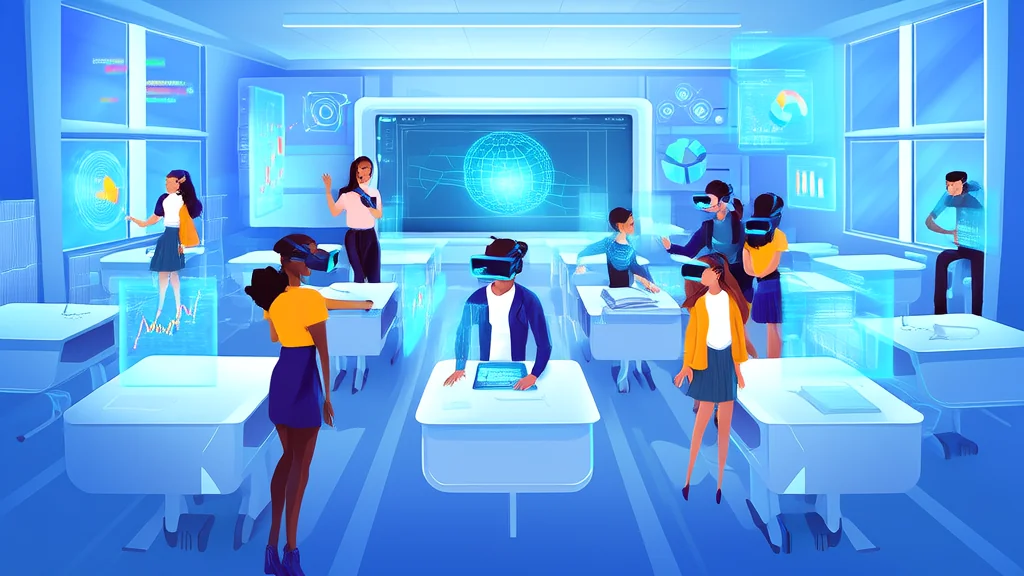
Emerging trends in AI for personalized education include the integration of augmented reality (AR) and virtual reality (VR) to create immersive learning experiences, the use of chatbots and virtual assistants to provide 24/7 support, and the application of AI to assess and improve soft skills such as critical thinking and creativity. Predictions for the next 2-3 years suggest a continued rise in the adoption of AI-driven educational tools, with a focus on enhancing accessibility and inclusivity. Potential new applications include the use of AI to support special education needs, such as providing personalized learning plans for students with disabilities.
Investment and market growth projections are highly optimistic. According to a 2022 report by MarketsandMarkets, the global AI in education market is expected to grow from $1.5 billion in 2020 to $19.8 billion by 2025, at a CAGR of 47.5%. This growth will be driven by the increasing investment from both public and private sectors, the development of new AI technologies, and the growing recognition of the transformative impact of AI on education. As the market continues to evolve, we can expect to see more innovative solutions and a broader range of applications, ultimately leading to a more effective and equitable educational system.